The latest News and Information on DevOps, CI/CD, Automation and related technologies.
Cloud deployments and containerization let you provision infrastructure as needed, meaning your applications can grow in scope and complexity. The results can be impressive, but the ability to expand quickly and easily makes it harder to keep track of your system as it develops. In this type of Kubernetes deployment, it’s essential to track your containers to understand what they’re doing.
At first glance, this may appear counterintuitive. After all, aren’t public clouds lauded for their scalability, flexibility, and cost-efficiency? However, a closer examination reveals a more nuanced reality. This article delves into the driving forces behind cloud repatriation, helping you determine whether it might be the right fit for your organization.
Define PromQL Macros to standardize complex PromQL queries in Levitate.
At Cribl, we take pride in doing things differently. Our Customers First mentality is at the heart of everything we do as an organization–from free education and sandboxes, community programs, and platforms, to streamlining legal reviews on contracts. We strive to solve problems from first principles – understanding root causes to build optimal experiences vs. piecemeal solutions together. We aim to be a partner—working with you to address your challenges holistically.
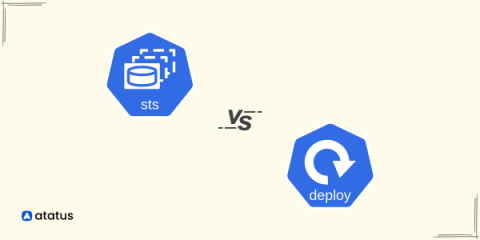
As Kubernetes continues its ascent as a leading container orchestration platform, it's common for users to encounter a perplexing choice between two prominent workload controllers: StatefulSets and Deployments. Despite both controllers being instrumental in managing high-availability workloads, they diverge significantly in terms of features and use cases. Grasping these distinctions is pivotal for fine-tuning the performance and scalability of your Kubernetes infrastructure.