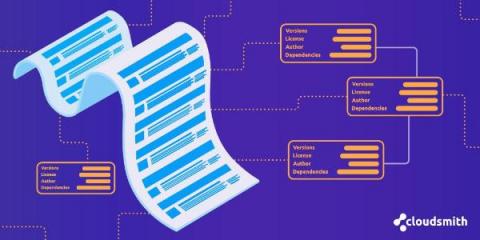
How to Generate and Host an SBOM
Ciara details how and when to generate an SBoM with the help of open-source tooling. Learn how to host SBoMs, as well as other SBoM considerations.


The latest News and Information on DevOps, CI/CD, Automation and related technologies.
Ciara details how and when to generate an SBoM with the help of open-source tooling. Learn how to host SBoMs, as well as other SBoM considerations.
Modern application deployments rely heavily on containerization for its scalability, availability and ease of maintenance. Legacy applications implemented before the containerization era often use monolithic, hardware-centric architectures that are difficult to scale and manage. These legacy applications may have multiple services bundled into the same deployment unit without a logical grouping.
The first continuous integration (CI) tools were all self-hosted, meaning they ran on a developer’s local computer or server. Although this setup was viewed favorably by dev teams at the time, it has limited flexibility, and developers had to spend time maintaining the infrastructure.
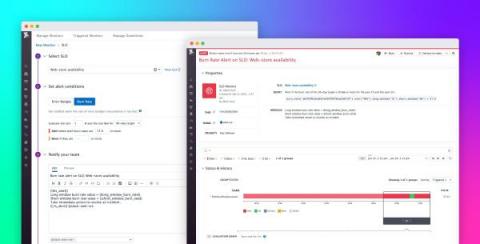
Service level objectives (SLOs) state your team’s goals for maintaining the reliability of your services. Adopting SLOs is an SRE best practice because it can help you ensure that your services perform well and consistently deliver value to users. But to gain the greatest benefit from your SLOs, you need ongoing visibility into how well your services are performing relative to your objectives.
For more information, read this tutorial: https://circleci.com/blog/intro-to-software-testing-life-cycle/
Does technology fascinate you? Are you curious about and interested in learning about different software, hardware and devices? If you answered yes to these questions, you should become a system administrator aka sysadmin. A sysadmin is responsible for monitoring and maintaining computer systems in a network or environment that has multiple users. It’s a great time to become a sysadmin now because the technology sector is booming and yet it’s facing a major Skills shortage.
Today, we’re excited to announce the release of Cycle’s new pricing model! With this new model, we aim to make our pricing far more straightforward and better suited for larger deployments and customers. While our current pricing model solved the needs of our customers for the last few years, we’ve learned enough that it’s now time to make a change. Before talking about the new model, let’s dive into how we got here.
A few weeks ago we had a major incident. We were releasing our Practical Guide to Incident Management, and after posting about it online an incident.io employee noticed that the page wasn’t loading. Just to set the scene, I’ve been at incident.io for 3 months and don’t have any experience of incidents in my previous role. When the team got paged I expected this to be one of those “follow along and learn how the wizards work their magic” exercises.