Resolve Actions - Integrating with HashiCorp Vault
Integrate with 3rd-party password vaults, such as HashiCorp Vault, to retrieve credentials (secrets, keys, etc) for use within your Resolve Actions automations and runbooks.


The latest News and Information on DevOps, CI/CD, Automation and related technologies.
Since entering the scene in the late 2000s, DevOps has changed the way development and IT operations teams collaborate together to produce and deploy new digital services, apps, features, and updates. DevOps has helped to streamline the production process to ensure more efficient workflows and a more reliable service. This created a shared responsibility between development and operations teams to collaborate together with the goal of creating a premium product or service for their customers.
June 14th, 2021: Canonical and Google Cloud today announce Ubuntu Pro on Google Cloud, a new Ubuntu offering available to all Google Cloud users. Ubuntu Pro on Google Cloud allows instant access to security patching covering thousands of open source applications for up to 10 years and critical compliance features essential to running workloads in regulated environments. Google Cloud has long partnered with Canonical to offer innovative developer solutions, from desktop to Kubernetes and AI/ML.
Much of the fuel for today’s business organizations is comprised of cloud computing and digital and SaaS applications. So, if something goes wrong with them, there will be a grave impact on productivity, customer satisfaction and even loyalty, as well as on the costs required for resolving the incident, remediating damage, and getting back to business.
Migrating your on-prem infrastructure to the cloud offers a host of benefits, including scalability, mobility, security, and cost reduction. When it comes to cloud network monitoring, tracking the availability and performance of the cloud services your applications rely on becomes even more important. However, moving from self-managed infrastructure to third party–managed services introduces a number of challenges.
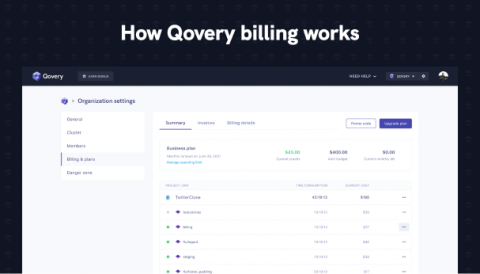
Let’s see how the Qovery billing is working as we are about launching the v2 in less than two weeks. Since we launched Qovery in January 2020, our product was free of charge for our “community” and “business” plans - even if on the pricing page it was mentioned the opposite. Making Qovery free was the perfect way to get product feedback and iterate with our users without the cost constraint.