Keep your configs in good order with sensuctl prune
We’re excited to share our first-ever alpha feature: sensuctl prune, which will help you easily (and safely!) remove resources you no longer need.


The latest News and Information on DevOps, CI/CD, Automation and related technologies.
We’re excited to share our first-ever alpha feature: sensuctl prune, which will help you easily (and safely!) remove resources you no longer need.
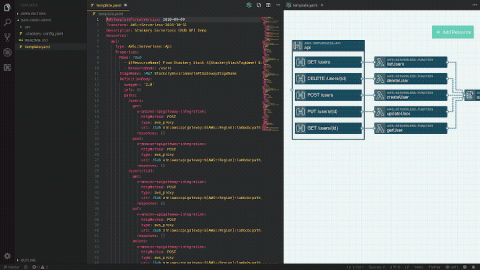
Stackery’s secure serverless platform for AWS offers teams a key resource to help realize the promise of serverless – by automating otherwise complex infrastructure processes, we enable you to leverage the massive suite of AWS tools and services with minimal management overhead. It’s crucial for teams to do this while enforcing security and ensuring adherence to compliance guidelines.
Hasura is an open source engine that connects to your databases & microservices and auto-generates a production-ready GraphQL backend. By using Hasura in conjunction with Qovery, you get a blazing fast, auto-scallable and extensible solution to quickly build your applications.
Where are Docker container logs stored? There’s a short answer, and a long answer. The short answer, that will satisfy your needs in the vast majority of cases, is: From here you need to ship logs to a central location, and enable log rotation for your Docker containers. Let me elaborate on why with the long answer below.
Containers are becoming the new computing standard for many businesses. New technology does not protect you from traditional security concerns. If your containers handle any sensitive data, including personally identifiable information (PII), credit cards or accounts, you’ll need to take a ‘defense in depth’ approach to container security. The CI/CD pipeline is vulnerable at every stage, from build to ship to runtime.
TLS (and the previously used SSL) protocols make the web go round. They are fundamental when establishing a link between two computers, creating a very special mathematical relationship signified by the all-encompassing gesture of friendship: the handshake. So fundamental, in fact, that we probably take them for granted when we shouldn’t. The user relies on TLS encryption every day to protect data and the integrity of a session.
Charmed OSM and Managed Apps let telecom operators accelerate adoption of NFV. This is needed because the way we consume data has changed. We want data at a cheaper price with faster speeds and in larger quantities. To meet the challenge, telecom operators are changing the underlying network infrastructure that delivers data. Software-defined networking (SDN) and network function virtualisation (NFV) are enabling this by lowering costs and improving infrastructure flexibility.
IAM is the de-facto method of authorization in AWS. Most Kubernetes “Quick Start” guides for AWS do not adequately cover how to manage IAM access in your pods. This blog series will first go over the security issues specific to AWS IAM on Kubernetes, then compare solutions, and then we will end with a detailed walkthrough for setting up your cluster with one of those solutions.
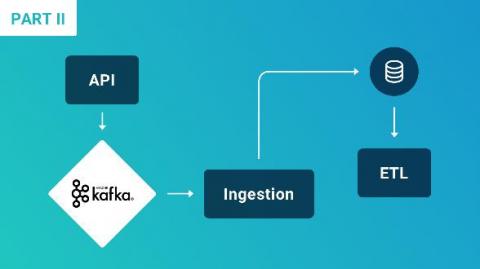
April 7th, 2020 • By Jon de Andrés Frías In the first part of our series of blog posts on how we remove technical debt using Apache Kafka at Rollbar, we covered some important topics such as: In the second part of the series, we’ll give an overview of how our Kafka consumer works, how we monitor it, and which deployment and release process we followed so we could replace an old system without any downtime.