Operations | Monitoring | ITSM | DevOps | Cloud

The latest News and Information on Continuous Integration and Development, and related technologies.

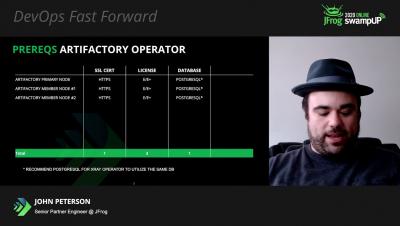
How To Deploy Artifactory via Operator in Openshift - John Peterson, Senior Partner Engineer, JFrog

In this lightning talk you will learn the basics of k8s operators and how they work in the Openshift environment. We will also go over the Openshift Operator Lifecycle and explain the stages and steps that take place to get the operator from the OperatorHub and deploy it into your Openshift environment. A demonstration will be done showing Artifactory being deployed into a new Openshift cluster to provide a learning experience on how Artifactory can quickly and easily be deployed into Openshift. Finally we will have a Q&A session to help answer any questions you may have about the integration and how you can use it.
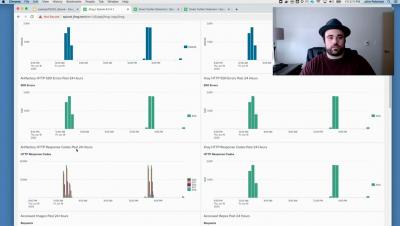
Let's Dive In: JFrog Unified Platform and Splunk - John Peterson, Senior Partner Engineer, JFrog

In our lightning talking will we cover the JFrog Unified Platform integration with Splunk for a wholistic analytics view into the unified platform logs. Combining the two best of breed applications makes tremendous sense for an enterprise without it valuable data insights are lost as well as any action the business might have taken. We will cover how to setup this integration, valuable data insights that can be gained, and how you can extend this integration to discover all new data insights you will wished you always had.

Stretch Your Reach with Unified JFrog Data and Elastic

DevOps teams rely on Artifactory as the bread and butter tool of universal binary repo managers, but observing its operations can be challenging. With multiple high availability nodes and unification with Xray as the JFrog DevOps Platform, that operations data is spread out across logs for each service in the JFrog Platform deployment. Operations teams need a view into valuable data insights that can only be gained through real time data mining and observation of the platform.

Creating Organizations and Teams and Managing Permissions In Cloudsmith

One reason for building a ‘single source of truth’ for software assets is that it gives the organization control over who can use what when. The ‘wild West’ of public repositories gives no control at all and can lead to a situation in which packages and dependencies of dubious provenance are integrated into builds without a second thought. Within the Cloudsmith world, we want to have the maximum security and control possible.

Power Up Helm Charts: Using Kustomize to Manage Kubernetes Deployments

Operations teams need to automate deployment of applications, and Helm is the industry-standard solution for deploying to Kubernetes. Like many software vendors, we provide Helm charts for installing Artifactory and other JFrog DevOps platform products, designed for the standard/recommended configurations most teams will need. These templates provide customers a limited set of configuration options.

DevSecOps for Kubernetes-based Applications

In this webinar, we will discuss concerns over security, privacy, and compliance holding back organizations from making the move to fully cloud-native initiatives. As more and more companies orchestrate their containerized applications in Kubernetes, enabling DevSecOps and continuous security becomes a must. We will look at the end-to-end SDLC process - from the first line of code up to an application running in a Kubernetes cluster - to examine the importance of DevSecOps.

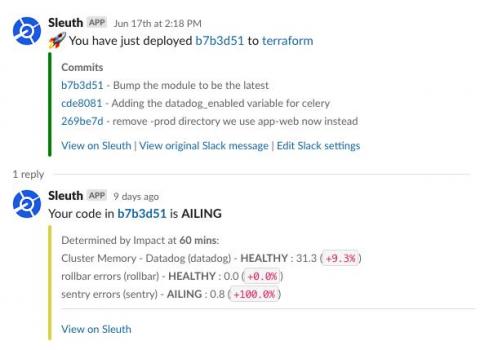
Real-time impact tracking and notifications

Your team is practicing DevOps and you’re delivering some flavor of Continuous Delivery. You’re deploying anywhere from three times a week to twenty times a day. You are moving fast! At that speed, how do you know if you are moving things in the right direction? Hopefully, your team has defined some key SLIs that define your application’s health.

Live or Die by 2022: DevOps in the Digital-First Economy

For companies to survive until 2022, they’ll need to focus on two things: Binaries and Edges. We’ve just wrapped up swampUP 2020, where we showcased this bold idea. We heard from you firsthand how DevOps Fast Forward is a must, and how software must be able to be distributed anywhere to enable the continuity of any business. Your experience confirmed how the global crisis has accelerated the digital transformation in your companies.

3 ways to bridge the DevOps gap between tools and teams

This blog is part of our series on how to use Atlassian features, automations, and integrations to take time back to ship better code, faster. Click here for the full list of 12+ new features or follow us on Twitter to stay up-to-date! Picture this: you've landed in a Development team that practices DevOps religiously (or maybe you're even leading one!). But despite spending hours integrating your tools and reading your edition of the Phoenix Project, you still feel like there's something missing.