Operations | Monitoring | ITSM | DevOps | Cloud

The latest News and Information on Containers, Kubernetes, Docker and related technologies.

Observability trends 2021

Observability has gained a lot of momentum and is now rightly a central component of the microservices landscape: It’s an important part of the cloud native world where you may have many microservices deployed on a production Kubernetes cluster, and a need to monitor these microservices keeps rising. In production, quickly finding failures and fixing them is crucial. As the name suggests, observability plays an important role in this failure discovery.

Bulletproofing Your Kubernetes Build

Most containers, pods, and namespaces in Kubernetes and OpenShift have been deployed with incorrect CPU and memory resource specifications. It isn’t just suboptimal DevOps—it’s dangerous from a service delivery perspective. Watch and see how managing capacity operationally prevents pods from swallowing unused capacity, frees nodes, and keeps the OOM killer away. This bulletproof strategy for maximizing utilization continuously integrates the optimal resources into the source code controlling your nodes and clusters.

Enterprise Kubernetes use cases: 4 real-world stories

There are common patterns and best practices across different verticals to be successful with Kubernetes adoption and everything starts with setting the appropriate business goals. Canonical is helping businesses in various industries, such as Telco, FinServ, Human Resources and the public sector to define the right cloud native strategy and implement a fully open source solution tailored to their needs.

Installing Additional Modules in the Icinga Web 2 Docker Container

The Docker images we provide for both Icinga 2 and Icinga Web 2 already contain quite a number of modules. For example, the Icinga Web 2 image contains all the Web modules developed by us. But one of the main benefits of Icinga is extensibility, so you might want to use more than what is already included. This might be some third-party module or a custom in-house module.

FluxCD and GitOps in the Enterprise

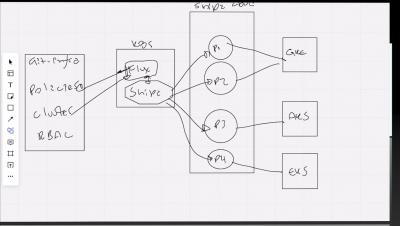
Flux is a CNCF based open source stack of tools. Flux focuses on making it possible to keep Kubernetes clusters and cloud-native applications in sync with external resources and definitions hosted in environments such as GitHub. Implementing tools like FluxCD should enable you to achieve results such as: The results above can bring obvious benefits, and many teams are adopting FluxCD as their tool of choice for GitOps.