Operations | Monitoring | ITSM | DevOps | Cloud

The latest News and Information on DevOps, CI/CD, Automation and related technologies.

Are your SLOs realistic? How to analyze your risks like an SRE

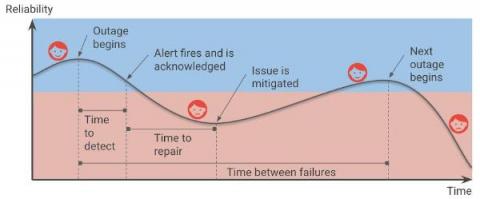
Setting up Service Level Objectives (SLOs) is one of the foundational tasks of Site Reliability Engineering (SRE) practices, giving the SRE team a target against which to evaluate whether or not a service is running reliably enough. The inverse of your SLO is your error budget — how much unreliability you are willing to tolerate.

Compliance And The Cloud

Having achieved almost consumer-grade accessibility, public cloud adoption is increasingly driven by individual business functions. Enterprise teams no longer need to understand how the technology works, or even where the service operates from. To buy a cloud product they just need a web browser and a credit card. But this level of simplicity raises challenges of its own when it comes to regulatory concerns.

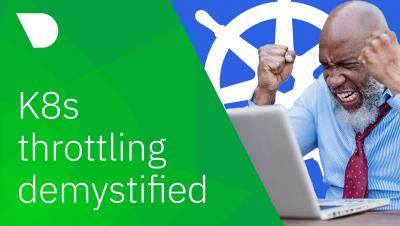
Kubernetes throttling? It doesn't have to suck!

Kubernetes has a bad habit of throttling CPU resources—with the result that you can suffer severely degraded performance or find yourself paying a fortune for extra, unnecessary infrastructure. Watch this video to learn how K8s clusters protect themselves from what they see as heavy CPU usage, and how you can monitor and troubleshoot the problem. We demonstrate how you can:– Use Netdata to reduce API response times by a factor of 7– Expect to reduce infrastructure resource requirements by 60-75%

Monitoring Applications Declaratively with Terraform

Running infrastructure at scale almost always guarantees dizzying complexity and anxiety-inducing pressure to maintain systems in a production environment. This is further exacerbated when multiple delivery teams require slight variations of the same infrastructure components, across several cloud providers, each with a different set of observability requirements. Gradually, production environments become large, unmanageable, difficult to change, and perhaps resembling the figure below.

Wind River Studio Enabling Hyundai Mobis and Hyundai AutoEver to Accelerate Development of Next-Gen Intelligent and Connected Vehicles

Wind River announces that Hyundai Mobis, one of the world's largest vehicle technology innovators and suppliers, and Hyundai AutoEver has signed an agreement to establish a strategic relationship that includes collaboration with Wind River Studio for the development of an automotive software framework and continuous test and test automation capabilities, as well as advanced software lifecycle management.

Kubernetes Throttling Doesn't Have To Suck. Let Us Help!

In the Kubernetes (K8s) community, there is a huge misconception about CPU allocation and utilization. Even highly experienced SREs find themselves struggling with the way Kubernetes allocates CPU resources, leading to misconfigured CPU allocations and extremely negative outcomes. For starters, this results in significant quality degradation on important service components, introduced by behind-the-scenes CPU limiting (or throttling).

AWS Summit London - My top 3 sessions

Hi, fellow Qovery readers, Albane here! 👋 To give you a bit of background, I joined Qovery in August 2021, initially as a Product Owner, then moved to a Product Marketing Manager position in March 2022. So yes, I’m all about our product. However, I also spend much time learning about our partner’s products, and that’s why, on April 27, 2022, I spent the day at the ExCel Centre in London to attend the annual AWS Summit.

Using Rancher Desktop for Local Kubernetes Development

Rancher Desktop is an all-in-one solution for container management on your desktop workstation. It provides an easily maintained Kubernetes installation that runs on your local machine and streamlines setting up containerized workflows in development. Assembling a Kubernetes cluster from scratch can be daunting, because multiple components must work in unison. With Rancher Desktop, you get everything preconfigured with one software download.