Operations | Monitoring | ITSM | DevOps | Cloud

The latest News and Information on DevOps, CI/CD, Automation and related technologies.

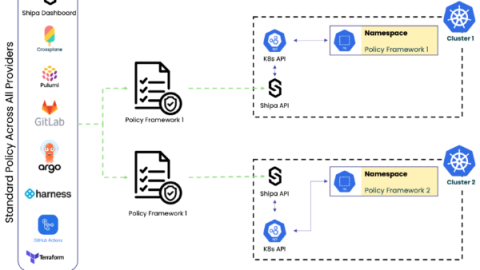
Kubernetes Multi-Tenancy

Things would be much simpler if we based all we built on Kubernetes on a single tenant type of architecture, meaning a single application running on the entire Kubernetes cluster with a single team who could access it. As teams scale Kubernetes adoption within their organizations, they see a different scenario instead, one with multi-tenant deployments performed by multiple teams and, most probably, across multiple clusters.


Override default resource status: New feature in StackStorm 3.7.0

Coming up in StackStorm 3.7.0 is a new feature that allows administrators of a StackStorm installation to “override” the default resource status that was specified by the pack owners. One of the benefits of StackStorm is the large variety of packs available on the StackStorm Exchange. But sometimes, users may not want the default content status provided by the community packs. We’re introducing a new feature into StackStorm 3.7.0 to make this easier to manage.

Using gRPC with Golang

In this tutorial, you will learn how to work with the gRPC Golang library for microservice communication by creating a simple note-taking application. APIs and service-to-service communication are what make modern microservice architecture possible. REST is generally the preferred implementation pattern, but if you only use REST, you could miss out on the significant performance gains that gRPC can offer. gRPC can provide better speed and efficiency than REST APIs.

Open Source Hacktivism, Open Source Gains Traction in the Enterprise, and More: Open Source Matters

Welcome to the 8th edition of Open Source Matters: our regular publication about the latest happenings in open source! Dive into OSS news and projects to watch with Mattermost's Ben Lloyd Pearson.

Bitbucket Cloud and Data Center Feature Comparison | Cloud Migration Demo | Atlassian

Start your Cloud journey today with the Atlassian Migration Program . We’ve distilled the most critical resources and learnings for our customers into a single one-stop-shop giving you the tools, support, guidance, and promotions you need to migrate with confidence. Get started on your migration now to start taking advantage of the best Atlassian has to offer and to ensure a smooth, successful move.

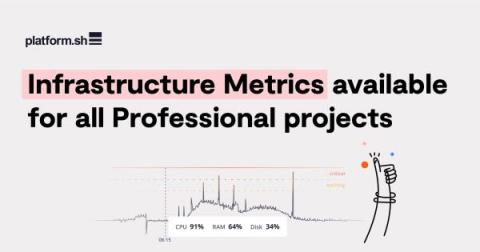
Infrastructure Metrics available for all Professional projects

The path to success in software development can be long and challenging. It requires a lot of skills and dedication as it’s not just about building applications, it’s so much more. It is also about being tailored for any situation, requiring us to be quick to adapt to change and to the unexpected.

Enhance your Puppet Enterprise support workflow with pe_status_check

puppetlabs-pe_status_check is a new supported module for Puppet Enterprise. It provides a series of indicators of system status that the Puppet Support team has determined to avoid support incidents or outages. Utilizing this module and the accompanying documentation will allow the user to craft preventative maintence workflows and, should it still be required, increase the quality of information in any support ticket, to help decrease the time to resolution for any incident.

JFrog Artifactory As Your NuGet Symbol Server

We’ve got great news for.NET developers – JFrog Artifactory can now act as your fully featured Symbol Server! Artifactory has long offered native support for NuGet packages, now developers can also store their symbol files in Artifactory where they can be indexed and consumed by the Visual Studio Debugger and other debugging tools.

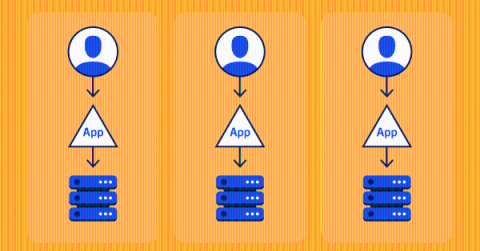
Building a SaaS Architecture with a Single Tenant Application

Most products that run as Software-as-a-Service (SaaS) are built to be multi-tenant, meaning that a single instance or deployment is meant to be used by multiple organizations. There’s a good reason for this: it’s generally easier to scale and operate multi-tenant applications. But in this new age of containers, orchestration, infrastructure-as-code, and Kubernetes, where it’s cheaper, faster, and simpler to deploy a new instance of an application, that may no longer be the case.