Operations | Monitoring | ITSM | DevOps | Cloud

How Network Documentation Software Keeps Network Diagrams Current

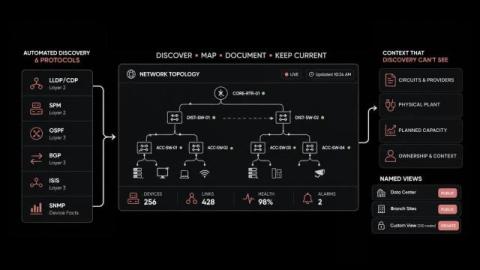
When did anyone last open your network diagram and trust what it showed? A diagram drawn in a static drawing tool is accurate on the day it is saved. One quarter, two circuit upgrades and a hardware refresh later, it describes a network that no longer exists. Nothing warns you that this has happened. The file still opens, still prints, and still gets attached to change requests, which is what makes it risky during an incident.

Storage Monitoring Tools and the KPIs Behind Each Failure Domain

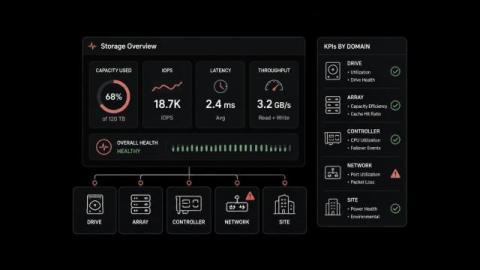
When an application slows down, how long does it take to confirm whether storage caused it? The answer depends entirely on whether anything is collecting from the array itself. The server dashboard reports healthy CPU and memory, the network graphs look clean, and the array holding the data says nothing at all. Storage failures announce themselves late.

Why AI Agent Orchestration Needs Runtime Context Between Agents

Every multi-agent system depends on one agent handing its output to the next, and nothing in the architecture confirms that the handoff carried what it should have. Orchestration adds a failure surface that single-agent architecture doesn’t have: a point between every two agents where one has to trust that the other passed along everything it needed, unverified.

Monzo's Stand-In Held Up on Wednesday. Some Customers Still Had a Bad Day.

On Wednesday 19 August, Monzo had an outage. DownDetector logged more than 3,000 reports by midday. Monzo’s own statement was direct about what it did next: it activated Monzo Stand-in, its fully independent backup bank, while it investigated an issue affecting customers. By the end of the day, Monzo said the issue was resolved and all services were back. Stand-in did roughly what it was built to do, keeping essential banking functions running while the primary platform had a problem.

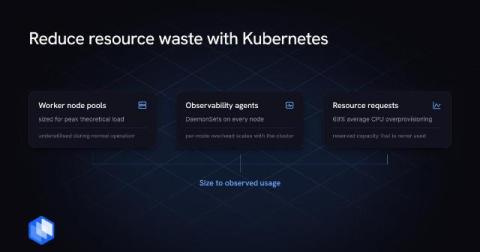
How to Reduce Resource Waste with Kubernetes

Kubernetes has changed the way teams deploy and scale applications, but many organizations overlook a critical aspect of running it well: resource utilization. Kubernetes excels at scheduling and scaling workloads. Making sure those workloads actually use the resources they reserve still falls on operations teams.

Cloud Migration Providers: Comparing Systems Integrators, Dev Shops, and Self-Service Platforms

Three ways to run a cloud migration compared: systems integrators, dev-shop staff augmentation, and self-service PaaS platforms like Qovery. How to choose. Melanie leads content at Qovery. She covers platform engineering trends, Kubernetes operations, FinOps, and the tools that help engineering teams ship faster.

ZTNA Security for Cloud Application Access: A Practical Overview

Nowadays, the average enterprise runs hundreds of cloud applications spanning from software-as-a-service platforms, infrastructure hosted in public cloud accounts, to internally built applications deployed on cloud infrastructure. So each of these has a different login flow, a different permission model, and an often completely independent definition of what a secure session looks like.

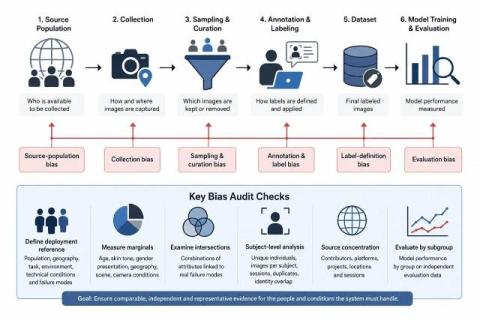
Dataset Bias in Computer Vision: How to Audit Human Image Data

Dataset bias in computer vision cannot be evaluated from one demographic percentage. The distribution available to a model is shaped by where images came from, how subjects entered the collection, which examples were retained, how labels were defined, what visual conditions were represented and how evaluation data was constructed. A useful dataset bias audit therefore examines the complete data pipeline.

How AI Is Turning Job Search Into an End-to-End Digital Workflow

Job searching used to be a loose collection of tasks: a few bookmarked roles, a resume file named "final_FINAL," and a handful of half-finished applications spread across tabs. Now, it's starting to look more like an actual workflow-one with inputs, outputs, checkpoints, and iteration. That shift is partly driven by AI tools that help candidates move from "I should apply" to "application sent" with fewer dropped steps. Platforms like ResumeCoach are part of that wider trend: not just creating documents, but helping people build a repeatable process they can run again and again.

How to Make DevOps Dashboards and ITSM Content Easier to Read with Typography

Operations teams live inside text. They read alerts, dashboards, logs, runbooks, release notes, escalation messages, postmortems, service catalogs, and knowledge base articles. During normal work, that text helps teams understand systems. During an incident, it can decide how quickly people separate a signal from noise.