
Operations | Monitoring | ITSM | DevOps | Cloud

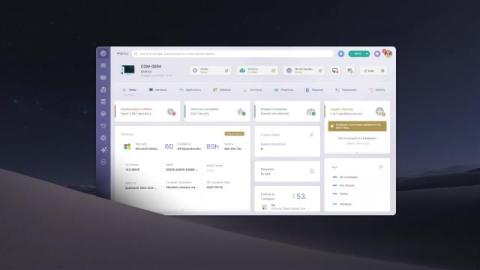
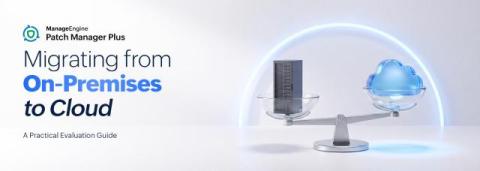
Migrating from Patch Manager Plus On-Premises to Cloud: A practical evaluation guide

Ever heard of Murphy's Law of IT Administration? It states that the server hosting your security tools will go down at the exact moment a critical vulnerability is making headlines everywhere. Whether it's a sudden power shutdown, a database hiccup, or a local network failure, losing access to your central management tools right when you need them most is every IT team's worst nightmare.
Monitor dependencies now available in the v3 API

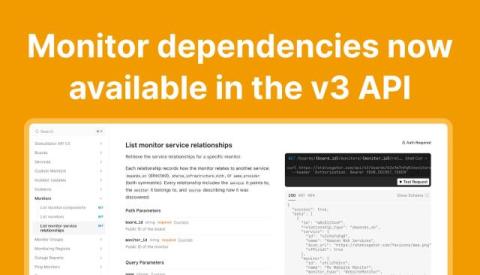
Monitor dependencies are now available through the StatusGator v3 API. The new endpoint lets you programmatically retrieve the relationships and dependencies associated with a monitor, giving your integrations and internal tools more context about the services each monitor relies on. Dependencies are already available in the StatusGator UI for Website, Ping, and Custom monitors, while StatusGator automatically identifies relationships for many Service monitors.

AI cost governance: policies to control AI spend

AI cost governance is the set of policies and controls that keep AI spend predictable and attributable: budget caps and token quotas set before deployment, prompt caching to cut repeat token costs, hard limits on reasoning steps and tool calls, and unified allocation so every dollar maps to a team, feature, or customer. Governance fails when it's advisory. It works when the caps are enforced in the platform and someone owns the number.

InvGate Asset Management as an AMDB: CI Dependencies And The Complete Asset Record

Ask an IT administrator what they mean when they say they need a Configuration Management Database (CMDB), and more often than not, they are describing something else entirely: knowing what assets they have, who is responsible for each one, and what breaks if one of them fails. That is the job of the Asset Management Database (AMDB), the lifecycle record built to answer exactly those questions.

Sovereign cloud and open source: Why software freedom matters for digital sovereignty

The sovereign cloud conversation has been dominated by physical location and legal jurisdiction. Both matter. But there's a third leg most discussions skip: the software stack itself. If the platform running a sovereign cloud is proprietary code controlled by a company in another country, its sovereignty has a soft underside.

Control trace volume with OpenTelemetry tail-based sampling

OpenTelemetry (OTel) tail-based sampling helps teams control trace volume by retaining errors, slow requests, and other traces worth investigating while dropping lower-value traffic. In distributed systems, a single request can fan out across many services, each emitting spans. That volume adds up quickly. Some applications produce millions of traces per hour, while large clusters generate more than 10 billion spans per day.

Continuous Delivery Excellence with Harness IDP | Harness Blog

This article explores how Harness Internal Developer Portal accelerates continuous delivery by providing self-service workflows, standardized deployment pipelines, and unified service catalogs. Discover how platform engineering teams use IDP to reduce deployment friction, improve developer velocity, and achieve operational excellence across the software delivery lifecycle. Why does achieving continuous delivery excellence feel like pushing water uphill when you already have CI/CD pipelines in place?

Measuring IDP Success: Metrics Beyond Tracking | Harness Blog

This guide explores outcome-based metrics for measuring Internal Developer Portal success without invasive developer tracking. Learn which KPIs demonstrate ROI—from deployment frequency to MTTR—while building trust and improving developer experience through privacy-respecting analytics. Your executive team wants to see measuring IDP success in numbers, but the moment you start tracking individual developer keystrokes, you've already lost the trust that makes the platform worth building.

Why Financial Services Teams Need Continuous Compliance Evidence

Financial services regulators increasingly expect organizations to demonstrate that controls operate continuously, not just on audit day. Yet many firms still rely on point-in-time reviews and manually assembled evidence, creating compliance gaps, operational overhead, and unnecessary risk exposure. Continuous configuration enforcement helps address both the regulatory and operational challenge by generating evidence as changes occur. Back to top.

How to scale Alloy as a central telemetry gateway: capacity planning, load testing, and production lessons

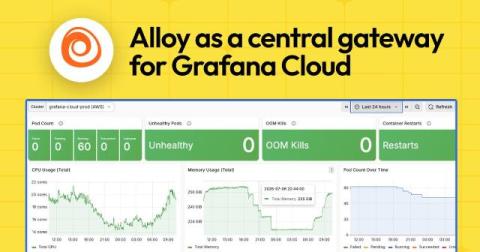
Running Alloy as a single-instance sidecar is simple. Running it as a centralized gateway that absorbs the full telemetry stream of an enterprise platform—tens of millions of active series, terabytes of logs per day, and tens of thousands of trace spans per second—is a different challenge altogether. To get it right, you need deliberate capacity planning, honest load testing, and a monitoring setup that doesn't rely on the very thing you're testing.