Operations | Monitoring | ITSM | DevOps | Cloud

Why Businesses Invest In Automated Returnable Asset Tracking

Businesses invest in automated returnable asset tracking because manual methods simply cannot keep up with the volume of pallets, crates, kegs, and containers moving through a modern supply chain every day. Automated systems attach a sensor, tag, or code to each container so it reports its own location and status instead of requiring someone to search for it, count it, or chase it down by phone. That shift reduces financial losses from missing equipment, frees up staff who would otherwise spend hours locating containers, and gives finance and operations teams a reliable way to track returnable assets across all their sites.

Operationalising Video Quality: A Reliable Pipeline for Enhancement and HDR Delivery

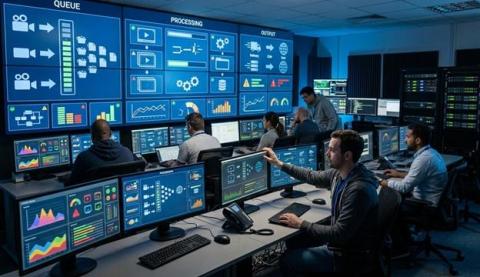
Video quality work is often treated as a creative exception: someone notices a soft clip, uploads it to a tool, downloads a result and sends it on. That approach works until the organisation has dozens of files, multiple delivery targets and no record of which settings produced which output. At that point, enhancement becomes an operations problem.

Three Types of Software to Utilize in the Fulfillment and Delivery Process

As a business grows, keeping track of orders can get a little bit messy. Fast. What worked when you were shipping a few dozen orders a day may not work when you're dealing with hundreds. Suddenly, your team is checking several spreadsheets, answering customer emails about missing orders, and trying to work out what's happening in the warehouse.

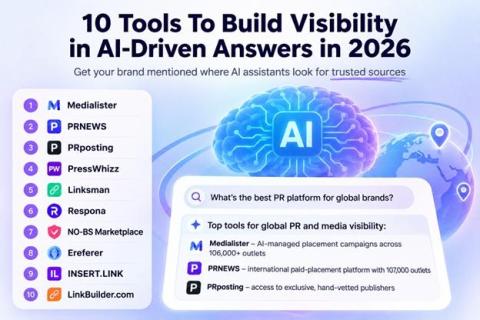
10 Tools To Build Visibility in AI-Driven Answers in 2026

People increasingly ask AI assistants for recommendations before they ever open a website, and Google now answers a large share of searches with an AI Overview. When the assistant names a few options, those are the brands that get considered. Most people never scroll to the sources behind the answer.

The Waiting Game for Data Centre Capacity (And How UK Businesses Can Beat It)

UK data centre occupancy hit 91% in 2024, according to Arizton market data, and new capacity is not arriving fast enough to close the gap. Grid connection wait times for new projects now run between five and 15 years, reports Data Center Dynamics, and Savills has attributed the 11% year-on-year drop in new capacity delivery to power constraints rather than a lack of demand or investment. Rising wholesale energy costs are addingpressure to an already tight market.

SSIS Data Flow Components Update Brings Expanded API and Data Source Support

The latest release of Devart SSIS Data Flow Components expands support for cloud applications and databases with new objects and fields, updated API and metadata support, and improved authentication and data access capabilities across multiple connectors.

Are AI and art in conflict with each other?

I recently heard a song that was written by a girl but sung and composed by AI. It left me confused— I'm not sure if I liked it. I was a bit prejudiced and automatically hated it because it was composed by AI. Similar to many works of AI, it had a rhythm, but it was too repetitive and lacked emotions. This made me think about all the other forms of art that might be created by AI, and it left me with a bitter feeling.

What build-versus-buy actually looks like in agentic engineering

Most build-versus-buy debates assume you're choosing once, at the start, and living with it. Agentic engineering doesn't work that way. The decision shows up at every layer of the stack, and the teams getting it right aren't the ones who picked "build" or "buy" as a philosophy. They're the ones who know which layer is which.