Operations | Monitoring | ITSM | DevOps | Cloud

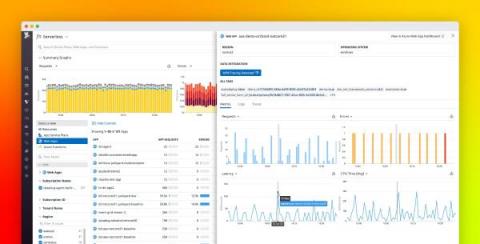
Explore Azure App Service with the Datadog Serverless view

Azure App Service is a platform-as-a-service (PaaS) offering for deploying applications to the cloud without worrying about infrastructure. App Service’s “serverless” approach removes the need to provision or manage the servers that run your applications, which provides flexibility, scalability, and ease of use. However, App Service also introduces infrastructure-like considerations that can impact performance and costs.

Best AWS monitoring management tool

Amazon Web Service or AWS has an immense cloud ecosystem now counting at over 200 services and products. Started with first generation services like EC2, S3, and RDS, now you can have satellite control centers, build virtual reality, and compose music using Artificial Intelligence. As the variety of services expanded, the necessity to monitor all those services efficiently became critical. Running a service without a proper monitoring system is no different from running while blind-folded.

Working with external data, a look at classfiltercsv()

When working with CFEngine, it’s common to hear advice about separating data from policy. Separating data from policy allows for separation of concerns, delegation of responsibilities and integration with other tooling. Each organization is different, and a strategy that works well in one environment may not work as well in a similar environment of another organization, so CFEngine looks to provide various generic ways to leverage external data.

DNS filtering: What is it and why do companies use it?

The Domain Name System (DNS) makes it possible for users to access websites using domain names, like wikipedia.org, in place of nine-digit IP addresses. Due to its ubiquitous nature, DNS can be used to block access to selected websites, which is commonly known as DNS filtering. Many companies see security and productivity benefits from implementing this strategy where appropriate. Read on as we explore some of the key details around how DNS filtering works and how it can be beneficial.

Observability trends 2021

Observability has gained a lot of momentum and is now rightly a central component of the microservices landscape: It’s an important part of the cloud native world where you may have many microservices deployed on a production Kubernetes cluster, and a need to monitor these microservices keeps rising. In production, quickly finding failures and fixing them is crucial. As the name suggests, observability plays an important role in this failure discovery.

A look inside how the Prometheus Conformance Program works and why it's important

Prometheus is the industry standard in cloud native metric monitoring with hundreds of thousands of installations, millions of users, and billions in market value. Speaking as a member of the Prometheus team, we have seen the project become a victim of its own success. While most people may be using Prometheus, not everybody is following the same operating standards.

Configuring Kibana for OAuth

Kibana is the most popular open-source analytics and visualization platform designed to offer faster and better insights into your data. It is a visual interface tool that allows you to explore, visualize, and build a dashboard over the log data massed in Elasticsearch clusters. An Elasticsearch cluster contains many moving parts. These clusters need modern authentication mechanisms and they require security controls to be configured to prevent unauthorized access.

Better, Not Just More, is the True Network Goal

In modern communications networks the demand for more speed and more capacity to drive ever more advanced services has been at the heart of network development – especially in the mobile space. Even the generational numbers hint at the increases – 3G, 4G, 5G - every change indicating an increase, every change indicating something that is somehow bigger and better. And, of course, the impression created is largely correct.

Metrics for improved Docker container management and performance

When running a cloud service, it’s never good for customers to be the first people noticing an issue. It happened to our customers over the course of a few months, and we began to accumulate a series of reports of unpredictable start-up times for Docker jobs. At first the reports were rare, but the frequency began to increase. Jobs with high parallelism were disproportionately represented in the reports.