
Operations | Monitoring | ITSM | DevOps | Cloud

Monitor dependencies now available in the v3 API

Monitor dependencies are now available through the StatusGator v3 API. The new endpoint lets you programmatically retrieve the relationships and dependencies associated with a monitor, giving your integrations and internal tools more context about the services each monitor relies on. Dependencies are already available in the StatusGator UI for Website, Ping, and Custom monitors, while StatusGator automatically identifies relationships for many Service monitors.

Migrating from Patch Manager Plus On-Premises to Cloud: A practical evaluation guide

Ever heard of Murphy's Law of IT Administration? It states that the server hosting your security tools will go down at the exact moment a critical vulnerability is making headlines everywhere. Whether it's a sudden power shutdown, a database hiccup, or a local network failure, losing access to your central management tools right when you need them most is every IT team's worst nightmare.

The role of AI in website monitoring : How AI is rewriting the rules of website monitoring

A peak sale season, missed transaction or availability issues, spiking customer tickets, and unhappy customers. Well, you know the trope. A few years ago, this was just part of doing business online. Today, it’s a problem you can avoid, thanks to artificial intelligence. We’ve quietly reached an important turning point in website monitoring. For most of the internet’s history, monitoring meant setting thresholds: set a number, wait for it to be crossed, get an alert, and fix the issue.

Monzo's Stand-In Held Up on Wednesday. Some Customers Still Had a Bad Day.

On Wednesday 19 August, Monzo had an outage. DownDetector logged more than 3,000 reports by midday. Monzo’s own statement was direct about what it did next: it activated Monzo Stand-in, its fully independent backup bank, while it investigated an issue affecting customers. By the end of the day, Monzo said the issue was resolved and all services were back. Stand-in did roughly what it was built to do, keeping essential banking functions running while the primary platform had a problem.

Why AI Agent Orchestration Needs Runtime Context Between Agents

Every multi-agent system depends on one agent handing its output to the next, and nothing in the architecture confirms that the handoff carried what it should have. Orchestration adds a failure surface that single-agent architecture doesn’t have: a point between every two agents where one has to trust that the other passed along everything it needed, unverified.

Storage Monitoring Tools and the KPIs Behind Each Failure Domain

When an application slows down, how long does it take to confirm whether storage caused it? The answer depends entirely on whether anything is collecting from the array itself. The server dashboard reports healthy CPU and memory, the network graphs look clean, and the array holding the data says nothing at all. Storage failures announce themselves late.

How Network Documentation Software Keeps Network Diagrams Current

When did anyone last open your network diagram and trust what it showed? A diagram drawn in a static drawing tool is accurate on the day it is saved. One quarter, two circuit upgrades and a hardware refresh later, it describes a network that no longer exists. Nothing warns you that this has happened. The file still opens, still prints, and still gets attached to change requests, which is what makes it risky during an incident.

How to scale Alloy as a central telemetry gateway: capacity planning, load testing, and production lessons

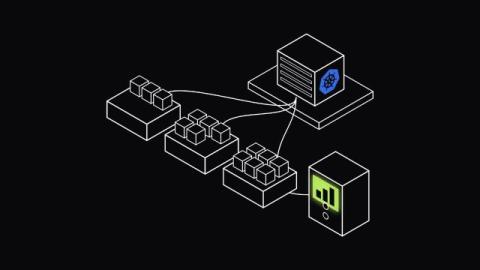
Running Alloy as a single-instance sidecar is simple. Running it as a centralized gateway that absorbs the full telemetry stream of an enterprise platform—tens of millions of active series, terabytes of logs per day, and tens of thousands of trace spans per second—is a different challenge altogether. To get it right, you need deliberate capacity planning, honest load testing, and a monitoring setup that doesn't rely on the very thing you're testing.

Why Financial Services Teams Need Continuous Compliance Evidence

Financial services regulators increasingly expect organizations to demonstrate that controls operate continuously, not just on audit day. Yet many firms still rely on point-in-time reviews and manually assembled evidence, creating compliance gaps, operational overhead, and unnecessary risk exposure. Continuous configuration enforcement helps address both the regulatory and operational challenge by generating evidence as changes occur. Back to top.

Measuring IDP Success: Metrics Beyond Tracking | Harness Blog

This guide explores outcome-based metrics for measuring Internal Developer Portal success without invasive developer tracking. Learn which KPIs demonstrate ROI—from deployment frequency to MTTR—while building trust and improving developer experience through privacy-respecting analytics. Your executive team wants to see measuring IDP success in numbers, but the moment you start tracking individual developer keystrokes, you've already lost the trust that makes the platform worth building.