The latest News and Information on Managed Service Providers and related technologies.
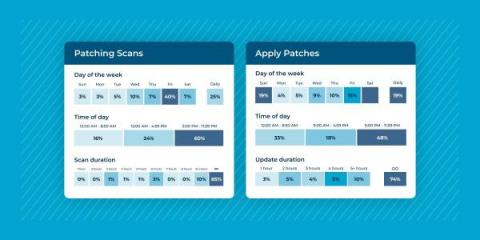
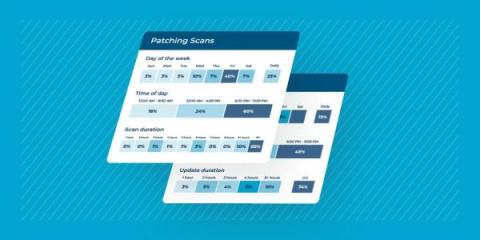
Patch management has become an essential part of IT and a critical part of ensuring an enterprise’s safety and efficiency. Why are these seemingly trivial updates so important? In short, because companies without an effective patch management solution are at a massively increased risk of cyberattack. There are other reasons why patching hardware and software is important.
Many entrepreneurs hang their shingle without putting much thought into sales. They find out further down the road that sales is the heart of enterprise, and that it demands just as much preparation and planning as any other aspect of business. More often than not, an MSP who doesn’t plan ahead finds a great deal of difficulty growing once their referral business has inevitably run dry.
The MSP industry is facing and ongoing movement across customers’ transition to the cloud, the evolving threat landscape, and a skills shortage that seems to be more pronounced than ever. Consider these facts from Gartner: The threat landscape is also evolving as highlighted by some of the following statistics: Data protection is a service that managed service providers (MSPs) need to consider as critical.
When I initially wrote my guide to blocking Microsoft’s auto-update to Windows 11—Windows 11: how to configure an auto-patch decline in N-central—I only had N-central partners and our N-central Patch Management in mind. However, after reading various other forums and discussions, I thought I’d take a more regimented approach to stopping or blocking Windows 11 from your machine.
Today, almost every IT department or MSP uses some form of mobile technology. Even though smartphones, laptops, tablets, and other mobile endpoints are incredibly useful for an organization, they can be difficult to manage. TechFunnel’s article on mobile devices in the workplace announces that one laptop is stolen every 53 seconds, while 7 million smartphones are lost every year.