Operations | Monitoring | ITSM | DevOps | Cloud

The latest News and Information on Observabilty for complex systems and related technologies.
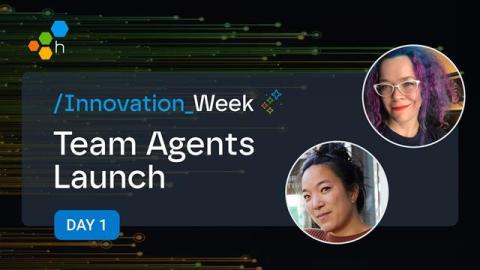
Honeycomb Team Agents: AI SRE Done Right

The best alert is the one that never fires. Picture an idyllic Tuesday afternoon: last night's release nudged checkout p99 up 41%, but an agent noticed. Nobody got paged, and your SLOs didn't start burning. Instead, the agent acted and already narrowed it down to one retry change. It filed a ticket for the Payments team and flagged the PR. By the time anyone would have noticed, the fix is in review. That's what SRE was always supposed to feel like.

Evaluate your AI agents with Fireworks AI models in Datadog Agent Observability

Teams that build agents on open models hosted on Fireworks AI, such as GPT-OSS, Kimi, GLM, Qwen, and MiniMax, need a reliable way to measure whether their LLM applications and agents are giving accurate, safe, and helpful answers efficiently. Datadog Agent Observability now supports Fireworks AI as a model provider, so you can get end-to-end visibility into your agents built on Fireworks AI, from traces and token usage to quality evaluations.

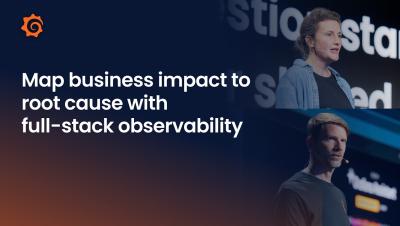
Full-Stack Observability with Grafana Cloud: From Business Impact to Root Cause

How do you trace a dropped conversion or a checkout failure to its technical root cause? See how full-stack observability in Grafana Cloud connects business impact to system performance across web and mobile clients, applications, infrastructure, and databases. In this session, Principal Software Engineer Jim Gehrett and Staff Product Manager Sarah Constant demonstrate how to start with a business problem and work backward through the technology stack to investigate its cause.

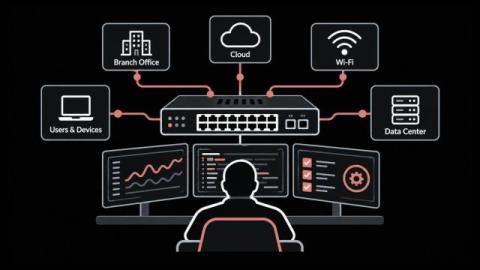
What Does a Network Administrator Do? Skills and Faster Fixes with Network Observability

When a branch office can’t reach the ERP system and customer calls start dropping, who gets the call? It’s almost always the network administrator. What that person does the rest of the week is less clear, and a CIO, a CFO and the admin themselves would probably each describe it differently. Part of the reason is how much the network has grown. Ten years ago it was mostly switches, cables and one building.

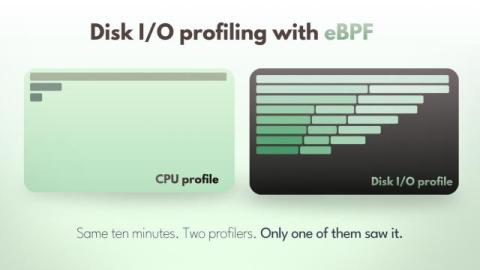
Disk I/O profiling with eBPF

Coroot's node-agent has had an eBPF CPU profiler for a long time. When something burns CPU, you open the flame graph and see which function. When something waits for the disk, you have nothing: the CPU profile is flat, because waiting does not consume CPU. The metrics for disk problems are always the same. Latency on a volume goes up, utilization hits 100%, queries slow down. Every chart agrees the disk is the bottleneck, none of them says what the database was doing while it waited. Flushing pages?

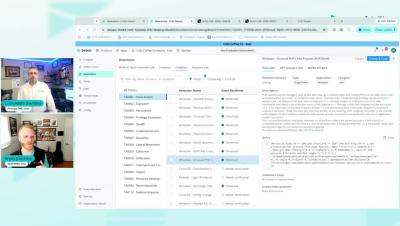
It's a Critical CVE, Now What?

Bryan Peace Leon Adato break down what exactly security-minded IT folks - whether they work in SRE, dev, networking, or more esoteric disciplines - should do when a new, critical, apocalyptic vulnerability is announced. They walk you step by step through research, analysis, and how to protect your company if a patch isn't out yet. Along the way they muse about the nature of the industry, the sudden spike in CVEs, and where to find the best hard cidr to take the edge off.

AI observability: Why traditional monitoring isn't enough for AI systems

Traditional monitoring watches four things: whether the system is up (availability), how fast it responds (latency), how often it errors (error rate), and how hard the underlying resources are working (resource utilization). This system works because software is deterministic: the same input produces the same output, so a deviation means something broke, and it announces itself as a timeout.

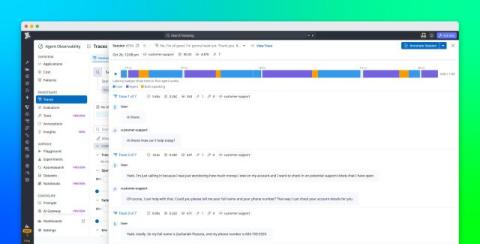
Trace voice agents with Datadog Agent Observability

A voice agent can return the right words and still deliver a poor experience. It might leave a caller in silence, speak over them, or stop midway through a response. A transcript may look correct even when the audio the user heard was delayed, incomplete, or different from the text on screen. These problems are difficult to diagnose from text traces alone. Voice conversations also involve more than a single request and response.