The latest News and Information on Observabilty for complex systems and related technologies.
Having enough time available is a struggle we all experience. Technological innovations enable us to develop and deploy software at lightning speed: Sometimes we can push more to production than our organizations’ IT environments can handle. At the same time, we want to increase customer satisfaction by reducing downtime. But how are you going to keep customer satisfaction rates high if a large majority of incidents are caused by changes?
When you migrated critical infrastructure to the cloud, what were your goals and expectations? Odds are, you hoped leaving on-premises infrastructure would produce significant organizational benefits. You probably figured you’d streamline operations and reduce management overhead. You felt you’d have an easier time meeting business goals. Perhaps most important of all, you likely expected your environment would become less complex, and even cost less to operate.
Observability and monitoring is a fundamental part of the contact center environment. When there are thousands of live voice and other multi-channel interactions happening, it is crucial to keep a close eye on the system because any issue in service gives an instant blow to the customer experience. Asterisk is a free and open source framework for building communications applications and is sponsored by Sangoma.
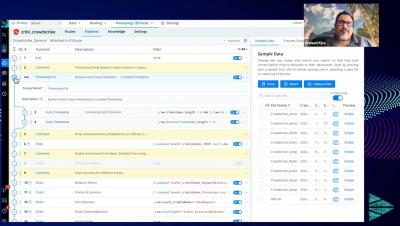
Tom Granot and myself have had the privilege of Vlad Mihalcea’s online company for a while now. As a result we decided to do a workshop together talking about a lot of the things we learned in the process. This workshop would be pretty informal ad-hoc, just a bunch of guys chatting and showing off what we can do with tooling.
For the last five years, Logz.io has tracked and measured the pulse of DevOps, as well as adoption of key trends and technology, through our DevOps Pulse survey and report. One of the obvious focus areas for us, as a company whose products are based on industry-leading open source, is the increased rise of incredibly useful open-source observability solutions, in general.
We are all moving towards a digital workplace - or a hybrid work scenario. Whatever be the case, you can expect end-users to call and complain about a poor WiFi experience. That's because network monitoring needs to be done from their standpoint, not from the enterprise end. And without the correct WiFi observability data, it's challenging to narrow down the root cause of the problem affecting remote employees. And those problems - poor WiFi performance leading to poor digital experience - can be pervasive and persistent.
I spent over a decade as a consultant working for dozens of companies in many fields and pursuits. The diversity of each code base is tremendous. This article will try to define general rules for modernizing legacy code that would hopefully apply to all. But it comes from the angle of a Java developer. When writing this, my primary focus is on updating an old Java 6 era style J2EE code to the more modern Spring Boot/Jakarta EE code.