PagerDuty On-Call Management
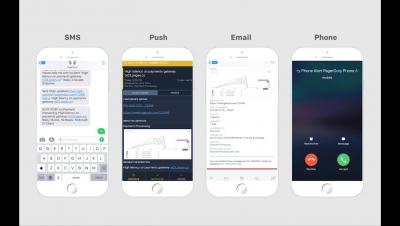
Manage your digital infrastructure more effectively than ever before with PagerDuty On-Call Management and Notifications.


PagerDuty is excited to participate in ServiceNow’s Knowledge19 event in Las Vegas this week. As a ServiceNow Gold Technology Partner, this is an event our team looks forward to all year because it gives us a chance to connect with many of our shared customers who depend on ServiceNow for critical parts of their operations. This year is even more exciting for us since we’re launching the newest version of our ServiceNow integration for HybridOps teams.
For years, traditional infrastructure provisioning and management followed a specific operating model that depended on Network Operations Centers (NOCs) to process operational events. As enterprise companies started to undergo digital transformation, the cloud created a different operating model: One that was much more agile and, some would argue, more efficient—and would replace all other operating models to create IT homogeneity.
As CEO and co-founder of IOpipe, Adam Johnson works with both individual developers and engineering teams at global enterprises to get real-time visibility into the detailed behaviors of their serverless applications. According to The New Stack’s 2018 ebook, serverless adoption has grown by 75 percent since 2017, but developers continue to cite concerns about application performance, risk, and monitoring as drawbacks to building on a serverless architecture.