Earlier this year, we showed you how to monitor Amazon Web Services Elastic Load Balancer (AWS ELB) with Cloudwatch. This piece is a follow up to that, and will focus on Classic Load Balancers.
The AWS marketplace gives users access to a large variety of SaaS and API products that can be easily found, subscribed to and used. One of the biggest advantages for users is the ability to benefit from an easier procurement and payment process — users can use their existing paying terms with AWS, and unify billing across all the AWS services they are consuming, including those offered in the marketplace. Logz.io is now available on the AWS SaaS Marketplace.
This week’s roundup highlights videos from Monitorama, making your own Grafana Plugins, NetApp’s fully open source monitoring stack and more.
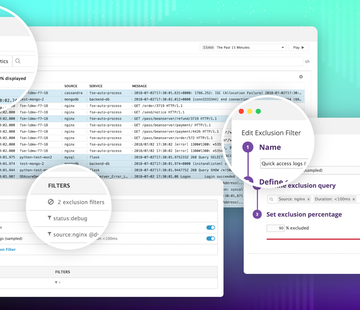
Welcome to part two of a three-part series on trend analysis of log event data. Today, we will explore how to perform, using Graylog, a few of the types of trend analysis discussed previously.
As product managers, you’re ultimately the one held responsible for the entire product. So the last thing you want to assume is that someone else has got monitoring and alerts covered. In the first days of a release, all eyes are on the new product or latest feature. Just a few months later, when you introduce a brand new feature, the old one might break in the process. At times like these, you want to be ahead of your users, and not hear from your users that something isn’t working.
BOSTON and TEL AVIV, June 13, 2018 — Logz.io, the leading provider of AI-powered log analytics, releases a specialized Docker Logging Plugin, enabling users to easily ship container logs to Logz.io. The Docker Logging Plugin was created to relieve many of the common issues developers experience when shipping container logs such as complex configuration, accidental pausing of container shipments, and potential loss of data.