Operations | Monitoring | ITSM | DevOps | Cloud

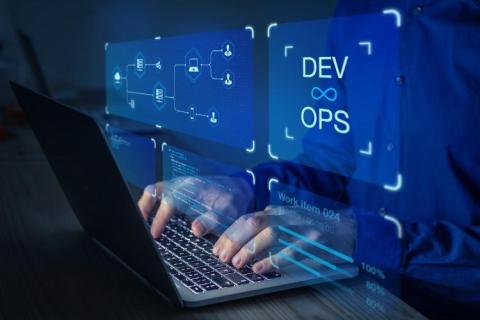
How To Build Your DevOps Toolchain Effectively

Software development, the adoption of DevOps practices has become imperative for teams aiming to streamline workflows, boost collaboration, and deliver high-quality products efficiently. At the heart of successful DevOps implementation lies a robust toolchain—a set of interconnected tools and technologies designed to automate, monitor, and manage the software development lifecycle.
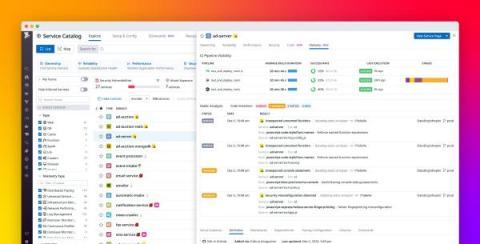
Improve your shift-left observability with the Datadog Service Catalog

Your applications are only as powerful as they are iterable. To keep up with their rapidly changing production environments, your teams need reliable CI/CD systems that implement best practices—including build and test automation, flaky test management, and deployment management. By optimizing their CI/CD pipelines, your teams can build their apps more efficiently, deploy them more safely, and catch bugs and security vulnerabilities before they make it to production.

Looking Back at 2023: State of the DevOps

Today we are going to take a lookback on trends in the DevOps and supply chain security space in 2023 What kind of year has 2023 been for DevOps? Are people generating SBOMs? Were there any mad vulnerabilities? Are we all using AI in our workflows? We have 3 wonderful panellists: Glenn Weinstein Cloudsmith CEO Josh Bressers VP of Security at Anchore, Podcaster, Blogger Luca Lanziani Head of DevOps and Platform Engineering @NearForm and Blogger.

How Cloudsmith Helped Protect the Software Supply Chain in 2023

As the "new guy" here at Cloudsmith (I was named CEO in August), I'm learning more every day about how customers use us to protect their software supply chains. We're doing everything we can to give you a single source of truth for every artifact - whether it's an open source package, a Docker container, a Linux image - that enters your software supply chain, and everything that you produce on the other side.

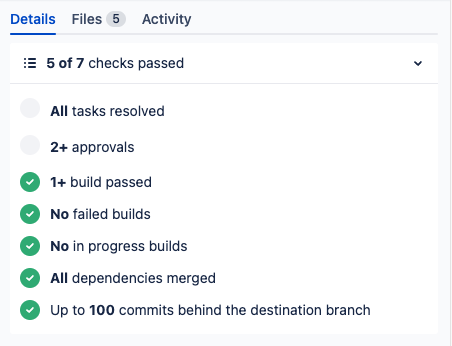
Custom Merge Checks in Bitbucket Cloud

Bitbucket Cloud is on a mission to become the most extensible cloud SCM and CI/CD product in the market. We believe that extensibility is a key enabler for large, complex organisations to operate effectively in the cloud, and we are excited to be leveraging Atlassian’s industry-leading extensibility platform, Forge, to bring this mission to life.

AI-Driven DevOps: How Artificial Intelligence is Reshaping Software Delivery

DevOps (development and operation) has dramatically changed processes of management in tech companies. This method or, as they say, religion, introduced new philosophy into development and operations. Earlier, when only the waterfall method was used, all deployments were really painful: if something went wrong you had to look for the reason on every stage, in every team. Every change in development had an impact on operations and vice versa. After the introduction of DevOps method the interaction between development and operations prevented a lot of mistakes and made deployment much easier.

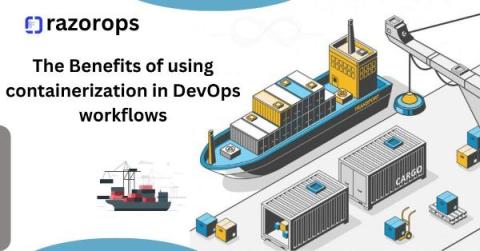
The Benefits of using containerization in DevOps workflows

Software development cycles demand rapid deployment and scalability, traditional infrastructure struggles to keep pace. Enter containerization—a revolutionary technology empowering DevOps teams to streamline their workflows, enhance portability, and drive efficiency in software development and deployment.

Testing a PyTorch machine learning model with pytest and CircleCI

PyTorch is an open-source machine learning (ML) framework that accelerates the path from research prototyping to production deployment. You can work with PyTorch using regular Python without delving into the underlying native C++ code. It contains a full toolkit for building production-worthy ML applications, including layers for deep neural networks, activation functions and optimizers. It also has associated libraries for computer vision and natural language processing.

Dave Farley reflects on 25 years of software development & the future of AI

In this episode Rob is joined by Dave Farley, software legend and author of books "Continuous Delivery" and "Modern Software Engineering”. The two tackle the essence of software development culture and the current state of software delivery. They unpack why it’s important to prioritize problem-solving abilities over technical skills when it comes to hiring, emphasizing a healthy culture and the need for continuous learning on the job.

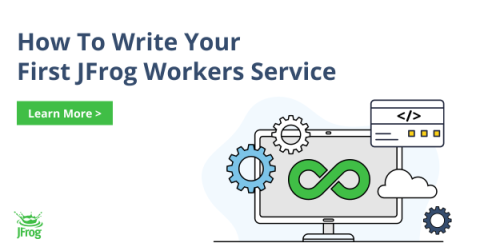
Doing DevOps Your Way On SaaS Solutions: Writing Your First JFrog Worker Service to Extend JFrog SaaS

To recap from our first blog post, JFrog Workers is a service in the JFrog Platform that provides a serverless execution environment, similar to AWS Lambda services. The Workers Service is similar to the user plugins available in JFrog self-hosted, and can be used to perform tasks that extend the capabilities of the JFrog Platform according to your requirements.

Stop observing, start automating: RedHat and LogicMonitor pioneer the next gen of Event-Driven Ansible

LogicMonitor has long been synonymous with observation — a platform that keenly watches over IT environments, alerting teams to potential issues. However, the age-old challenge remained: how to seamlessly transition from observation to action. Enter the LogicMonitor event-driven ansible integration with RedHat. What sets this solution apart is the fact our teams worked together to build it.

Expanding OCI support in JFrog Artifactory with dedicated OCI repos

Great news for developers who leverage containers — JFrog has expanded its support for the OCI Container standard with dedicated OCI repositories! Before we touch on that, let’s do a quick recap on OCI containers for those unfamiliar with them outside the context of Docker.

What's next for CI/CD? Analyst predictions

In today’s episode, Rob is joined by CircleCI’s own Aisling Conroy. Aisling, a key player in CircleCI’s product marketing and competitive intelligence, provides a window into the thoughts of analysts in the ever-evolving CI/CD space. Their discussion explores how the power of diverse perspectives in problem-solving can yield many different types of product offerings.

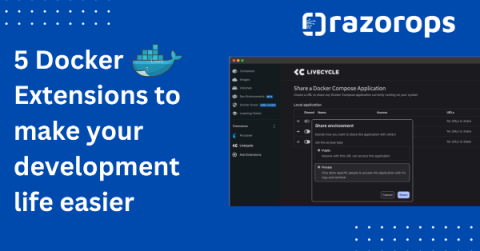
5 Docker Extensions to make your development life easier

Docker has revolutionized the way developers build, ship, and run applications. Its simplicity and efficiency in creating lightweight, portable containers have made it a go-to tool in modern software development. However, enhancing Docker’s capabilities with extensions can significantly boost productivity and simplify complex tasks. Here are five Docker extensions that can make your development life easier.