Operations | Monitoring | ITSM | DevOps | Cloud

The Best Kubernetes Monitoring Tools of 2026

Effective Kubernetes monitoring in 2026 is critical due to increased cluster scale and microservices complexity, demanding a shift toward unified observability (logs, metrics, and traces). The core focus is leveraging AI-driven features to automate anomaly detection, correlate diverse data, and significantly reduce Mean Time to Recovery (MTTR).

Best Elixir APM Tools in 2026: A Developer's Guide

Last updated: May 2026 Elixir applications have performance characteristics that are genuinely different from Ruby or Python. The BEAM virtual machine handles concurrency through lightweight processes, supervision trees restart failed processes automatically, and Phoenix channels can hold tens of thousands of persistent connections on a single node. These are strengths, but they also mean that the performance problems you encounter are different from what most APM tools were built to detect.

"It works on my machine": why environment parity is still a platform problem in 2026

How many hours did your team spend last quarter debugging issues that only appeared in one environment? What would change if every environment were guaranteed to be identical? In 2026, environment inconsistency remains one of the most expensive bottlenecks in software development. Developers frequently spend more time debugging differences between infrastructure setups than they do on their own code.

Humans aren't fast enough for 4 9's

When thinking about Service Level Objectives (SLOs) and contractual Service Level Agreements (SLAs) for availability, I always like to put the percentages into concrete numbers. It’s easy to lose track of what’s meant when saying “99.95%” availability, and even more is lost when thinking how much harder it is to achieve 99.99% compared to 99.95%. On a monthly basis, and in concrete terms, 99.95% availability means you get 21 minutes and 55 seconds of downtime.

Monitoring Your Azure to Azure Local Migration: One Dashboard for Both Sides

More organizations are moving workloads from Azure public cloud to Azure Local (formerly Azure Stack HCI) than most people realize. The reasons vary: data sovereignty requirements, latency-sensitive workloads that need to be closer to the edge, cost optimization for predictable workloads where reserved cloud capacity doesn’t make financial sense, or regulatory constraints that require data to stay on-premises.

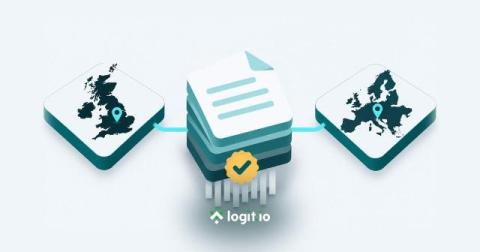
UK and EU log data residency and verified deletion

Security and procurement teams rarely ask only whether logs are searchable. They ask where those logs live, whether UK and EU estates stay apart, what happens when retention ends, and how you can show that data was deleted. This guide walks through the published region model, custom residency, and verified deletion for Logs stacks on Logit.io. Contents Start Free Trial Unlock complete visibility with hosted ELK, Grafana, and Prometheus-backed Observability Start Free Trial.

Lorka AI and the Next Phase of Smart Digital Transformation

Digital transformation has moved past the experimentation phase. For most organizations, the question is no longer whether to adopt digital systems, but how effectively those systems can adapt, learn, and scale. Artificial intelligence has become the defining force in this evolution. What was once limited to automation and analytics is now expanding into systems capable of continuous decision-making and operational intelligence. Within this landscape, platforms like Lorka AI are positioning themselves as enablers of a more adaptive, AI-native enterprise model.

Why More Homeowners Are Using 3D Walkthroughs Before Building

Building a custom home is exciting until you're staring at a floorplan trying to work out whether the kitchen will actually feel too small or if the living room windows are going to let in enough natural light. Companies like PlanIt VR are helping homeowners experience their future homes through realistic 3D virtual tours, walkthroughs, flythrough videos, and mobile VR. For most people, plans on paper only tell half the story and this technology is changing the way people make design decisions and, honestly, making the whole process a lot less stressful.

Coinspaid and The Residency Partner to Simplify Blockchain Payments for Early-Stage Startups

For many early-stage startups in the blockchain space, building a secure and scalable payment infrastructure is one of the most complex challenges. A new partnership between Coinspaid and The Residency is designed to remove that barrier and accelerate growth for emerging companies. As covered by Reuters, the collaboration will provide startups within The Residency community with access to Coinspaid's advanced stablecoin infrastructure on preferential terms, allowing them to implement robust financial systems from the outset.