Organizations in every industry are becoming increasingly dependent upon data to drive more efficient business processes and a better user experience. As the data collection and preparation processes that support these initiatives grow more complex, the likelihood of failures, performance bottlenecks, and quality issues within data workflows also increases.
Splunk is honored to be the recipient of a series of six new awards from TrustRadius—all based on customer reviews. In this round, TrustRadius grants its “Best of” Awards to the top three products per Best Feature Set, Best Value for Price and Best Relationship in each respective category.
The Splunk Operator for Kubernetes team is extremely pleased to announce the release of version 2.0! This represents the culmination of many months of work by our team and continues to deliver on our commitment to provide a high-quality experience for our customers wishing to deploy Splunk on the Kubernetes platform.
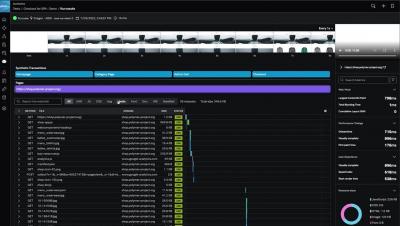
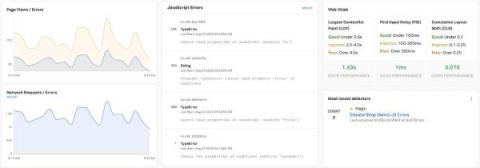
Today we’re proud to announce the general availability of best-in-class Synthetic Monitoring capabilities within Splunk Observability Cloud. Now, IT and engineering teams can proactively measure, monitor and troubleshoot their critical user flows, APIs and services, connected across Splunk Observability.
They say, “What happens in Vegas, stays in Vegas,” but I wanted to highlight the role our customers played at last month’s.conf22, our annual users’ event at the MGM Grand. It was awesome meeting customers in person again, and connecting virtually with thousands more. We had a terrific turnout with 8,200+ customers and partners representing 113 countries and more than 6,500 organizations.
You have more data coming at you than ever before. Over the next five years, the total amount of digital data is going to be more than twice the amount of data created since the advent of digital storage. With the success of your company often determined by how you anticipate and respond to threats – and leverage meaningful insights – you need the ability to quickly search and find insights in your data, despite this increasing deluge of information.
When considering application source code, the way you maintain consistency throughout environments is mostly straightforward. You write application code, commit it to source control, and then build, test and deploy via a CI/CD pipeline. Since the application is defined by the source code living in source control, the build will be identical in all environments to which it’s deployed. But what about the infrastructure on which an application runs?
People make mistakes, technology breaks down, and processes aren’t infallible. But, when incidents happen, what can we do about it? What can we learn? As with all things, learning isn’t a binary action, it’s a process. And, when an incident occurs, organizations typically conduct a post-mortem analysis and generate a post-incident review to uncover what went wrong and why.