State of DevOps Cloud Solutions 2020
Every company claims to have a cloud/hybrid DevOps platform that enables and powers developers working remotely. Time to make order of the chaos.*


Every company claims to have a cloud/hybrid DevOps platform that enables and powers developers working remotely. Time to make order of the chaos.*
Our IT surveys have become a huge hit! The press releases and blogs we put out recapping the results from our surveys are consistently picked up and republished by third parties. We're happy to be able to provide such useful insights into the IT professional's experience, benefitting not just us, but the IT industry as a whole. Before we get into the results of our most recent survey, be sure to check out some of our previous studies.
We’ve recently updated one of the most powerful features in Lumigo: Explore, and I wanted to tell you a bit more about it and what it can do for you. Explore is a quick and easy way to find events you are interested in your Lambda invocations. Without a feature such as Explore, you would have to sift through thousands of invocations to find what you are looking for, wasting a lot of time.
If we had to give a name to this release, we would definitely call it WUX 3.0, or the Great User Experience Monitoring Development, with visual enhancements but particularly with the session recorder replacement, which now supports the latest Selenium versions. This version contains new dashboards for enterprise users now also available for all Community version users.
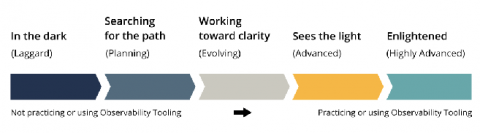
Observability is more than tooling. Of course having the right tools in place so you can ask arbitrary questions about your environment, without having to know ahead of time what you wanted to ask, is critical. Finding the unknown unknowns is the coveted observability sweet spot. However, it’s the actual doing it that proves a bit more challenging especially when you’re weaning off legacy tools.
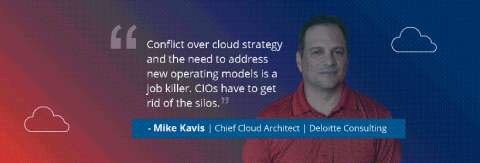
Today we share a recent conversation with Mike Kavis, Chief Cloud Architect at Deloitte Consulting. Mike has held numerous technical roles such as CTO, Chief Architect, and VP positions with over 30 years of experience in software development and architecture. He led a team that built the world's first high speed transaction network in Amazon's public cloud and won the 2010 AWS Global Startup Challenge.
People working in IT support and incident management right now are faced with unusual difficulties supporting large remote workforces and managing unpredictable workloads. On Reddit, system admins and other IT pros are bemoaning the hiccups and hassles of working in isolation while trying to resolve issues and maintain high SLAs. You can’t go grab your indispensable SME for troubleshooting, because that person is also home and inundated with messages and alerts from many different tools.
SAN JOSE, Ca. and RESTON, Va. – May 5, 2020 – Carahsoft Technology Corp., The Trusted Government IT Solutions Provider®, today announced that Virtana, the leader in hybrid infrastructure management for mission-critical workloads, has named Carahsoft its Federal distributor for its entire portfolio.
It’s no secret that organisations have a love-hate relationship with data. Decision making can be unguided and market insights can be lost when organisations collect too little data. On the other hand, with large and active datasets, where requests number in the hundreds of thousands, maintaining database performance is increasingly difficult. One open source application, Apache Cassandra, enables organisations to process large volumes of fast moving data in a reliable and scalable way.