Operations | Monitoring | ITSM | DevOps | Cloud

Monitor code quality in Datadog with SonarQube

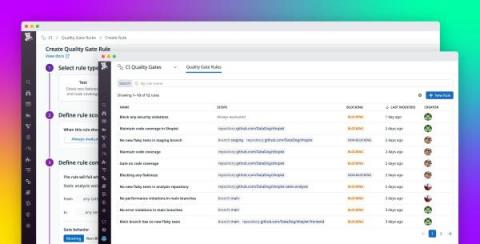
SonarQube is a tool for static code analysis that integrates with your existing CI pipelines to run quality checks on your codebase as it changes. As you develop and release new code, constant monitoring of code quality is crucial to ensure compliance, stability, and security. SonarQube’s Clean-As-You-Code philosophy helps to avoid technical debt by running regular code checks and alerting you to any problems early on.

Monitor your Argo CD clusters with Datadog

Argo CD is a declarative continuous delivery tool for Kubernetes developed by the Cloud Native Computing Foundation (CNCF). Argo CD automates your application deployment by continuously monitoring the live state of your containers and comparing it against the desired state in your Kubernetes manifest files, then pulling changes into your Kubernetes clusters as needed.

Correlate Datadog RUM events with traces from OTel-instrumented applications

OpenTelemetry (OTel) is an open source, vendor-neutral observability framework that supplies APIs, SDKs, and tools for the instrumentation of cloud-native applications and services. OTel enables you to collect metrics, logs, and traces from a variety of sources and route them to various backends. By itself, however, it can’t help you analyze this data or correlate telemetry from different parts of your stack.

Datadog's commitment to OpenTelemetry and the open source community

The OpenTelemetry (OTel) project is an open source initiative with the goal of providing vendor-neutral standards and tools that enable users to collect telemetry from any source in their environment and send it to any backend. A core tenet of Datadog is to provide a single, unified platform for customers to easily collect and monitor all of their observability data, regardless of where it comes from.

Use library injection to auto-instrument and trace your Kubernetes applications with Datadog APM

Many organizations rely on distributed tracing in Datadog APM to gain end-to-end visibility into the performance of their Kubernetes applications. But as teams grow, it can become impractical for them to manually configure each new application with the libraries and environment variables needed for tracing.

Monitor Boundary on the HashiCorp Cloud Platform with Datadog

HashiCorp Boundary provides a secure way to manage remote access to applications and infrastructure without exposing the underlying network or credentials. Launched two years ago as an open source solution, HashiCorp recently announced a fully managed version on the HashiCorp Cloud Platform (HCP), enabling you to manage identity-based authorizations, user and target onboarding, and more for dynamic environments.

Monitor Tanzu Kubernetes Grid on vSphere with Datadog

With vSphere and Tanzu Kubernetes Grid (TKG), VMware enables enterprise organizations to combine the economic advantages of virtual machines (VMs) with the agility, portability, and scalability provided by Kubernetes. vSphere is VMware’s platform for the provisioning and management of VMs.

Best practices to prevent alert fatigue

As your environment changes, new trends can quickly make your existing monitoring less accurate. At the same time, building alerts after every new incident can turn a straightforward strategy into a convoluted one. Treating monitoring as a one-time or reactive effort can both result in alert fatigue. Alert fatigue occurs when an excessive number of alerts are generated by monitoring systems or when alerts are irrelevant or unhelpful, leading to a diminished ability to see critical issues.

Identify and resolve incidents faster with InsightFinder's offering in the Datadog Marketplace

InsightFinder is a SaaS platform that uses AI-backed predictive analytics to predict and prevent production incidents. Using InsightFinder with Datadog, you can quickly identify hidden correlations in your application metrics, logs, and events and address application issues before they devolve into production outages and create customer impact.

Best practices for continuous testing with Datadog

In Parts 1 and 2, we looked at how you can build and maintain effective test suites. These steps are a key part of ensuring that application workflows function as expected. But how you run your tests is another important point to consider, so in this post, we’ll walk through best practices for executing your tests across every stage of development. Along the way, we’ll also look at how Datadog supports these practices for the applications that you are already monitoring.