Operations | Monitoring | ITSM | DevOps | Cloud

Ship Logs from Docker with the Logz.io Fluentd Proxy

The past year has been significant for continued development of both DevOps practices and new developments across the open source community. To that end, Logz.io is moving forward with renewed support for the Fluentd log shipper. This new proxy will serve as an alternative to Filebeat and Logstash, which recently moved away from open source licensing. Additionally, this integration utilizes an HTTP proxy instead of the SOCKS5 proxy necessary for Filebeat.

Running Telegraf as Serverless on AWS Lambda for Monitoring Your Cloud

Telegraf is one of the coolest open source agents for collecting metrics. It’s part of the TICK Stack (Telegraf, Influx, Chronograf and Kapacitor) and with Telegraf you can collect metrics from a wide array of inputs and write them into a wide array of outputs. It is plugin-driven for both collection and output of data so it is easily extendable.

Quick Dictionary to Open<X> Projects in Observability

Do you also find yourself confused by all the Open-this and Open-that names flying around? There are currently a good few Open projects, standards, tools – OpenTelemetry, OpenTracing, OpenCensus, OpenSearch… heck, even my podcast is called OpenObservability! And new Open names seem to be popping up every other day. If you too feel this way, there’s no need. Many feel similarly confused.

Why Cloud-Native SIEM?

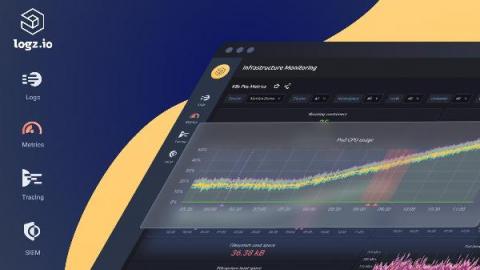
The SIEM is a central point where data is collected and correlated, and as we move to consume more cloud services and data sets the SIEM itself must also change in architecture. Architecture change is hard to make for existing products. Calling a product a ‘cloud solution’ is not the same as taking an on-premises product and hosting it for customers. It means building a new SIEM for a new world. There are a lot of reasons users seek new SIEMs.

Logz.io Delivers Cloud Native Monitoring to the Azure Marketplace

Logz.io is proud to launch a new partnership with Microsoft that enables Azure customers to directly integrate with Logz.io’s platform from within the Azure Console. This integration importantly allows Azure developers to begin monitoring their workloads faster than ever before, using the open-source technologies that their teams love. Check out this video for a demonstration of how it works.

Introduction to Custom Metrics in Python with the Logz.io RemoteWrite SDK

We just announced the creation of a new RemoteWrite SDK to support custom metrics from applications using several different languages. This tutorial will give a quick rundown of how to use the Python SDK. Using these integrations, Prometheus users can send metrics directly to Logz.io using the RemoteWrite protocol without sending them to Prometheus first. Each SDK, while for a separate language, is each capable of working with frameworks like Thanos, Cortex, and of course M3DB.

Announcing the RemoteWrite SDK for Custom Metrics in Python, Go & More

We’re proud to announce the creation of a new RemoteWrite SDK to support custom metrics from applications using Golang (Go), Python, and Java, with many more on the way. Each SDK will have automatic, continuous deployment of updates. Using these integrations, Prometheus users can send metrics directly to Logz.io using the RemoteWrite protocol without sending them to Prometheus first.

A Guide to Monitoring AWS Lambda Metrics with Prometheus & Logz.io

In this post we will discuss some key considerations and strategies to monitor your AWS Lambda functions. This will include: which Lambda metrics you’ll want to monitor, how to collect AWS Lambda metrics with Prometheus and Logz.io, how to create a monitoring dashboard with alerts, and how to search and visualize your metrics.

Observability with Zero Code Instrumentation? Meet eBPF

Current observability practice is largely based on manual instrumentation, which requires adding code in relevant points in the user’s business logic code to generate telemetry data. This can become quite burdensome and create a barrier to entry for many wishing to implement observability in their environment. This is especially true in Kubernetes environments and microservices architecture.

OpenSearch Is Now Generally Available!

I’m thrilled to say that OpenSearch has reached general availability (GA) with the release of version 1.0. This release represents a significant milestone and noteworthy accomplishment for a new open source initiative that was only launched a few months ago. I vividly remember that moment at the beginning of the year when we all woke up to Elastic’s announcement that it would take Elasticsearch and Kibana off the Apache 2.0 OSS license.