Operations | Monitoring | ITSM | DevOps | Cloud

ObservabilityCON Day 3 recap: What's new in Loki 2.0, tracing made easy with Tempo, observability at the Financial Times, and a Minecraft NOC

Today is the last day of ObservabilityCON 2020! We hope you’ve had the chance to catch the talks so far, and will tune in live for today’s sessions. View the full schedule on the event page, and for additional information on viewing, participate in Q&As, and more, check out our quick guide to getting the most out of ObservabilityCON. If you aren’t up-to-date on the presentations so far, here’s a recap of day three of the conference.

Grafana 7.3 released: Support for the Grafana Tempo tracing system, new color palettes, live updates for dashboard viewers, and more

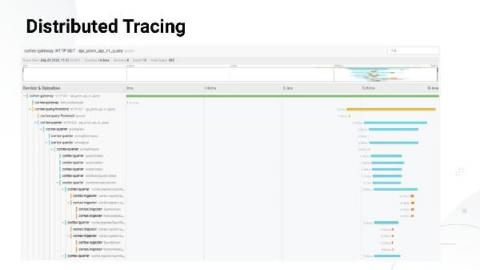
Grafana v7.3 has been released! With Grafana 7.0, we rounded out our observability story by making tracing a first-class citizen in Grafana alongside metrics and logs. That release included integrations with Jaeger and Zipkin, and earlier this month, we announced our integration with AWS X-Ray. At ObservabilityCON on Monday, we announced Grafana Tempo, our new open source distributed tracing system. Tempo is massively scalable, cost-effective, and easy to operate.

ObservabilityCON Day 2 recap: The latest Grafana Cloud tools for Prometheus to improve alerting, debugging, and scaling. Plus why continuous monitoring matters now

ObservabilityCON 2020 is live! This week Grafana Labs is bringing together the Grafana community for talks dedicated to observability. We hope you’re able to catch the great sessions we have planned. You can find the full schedule on the event page, and for additional information on viewing, participating in Q&As, and more, check out our quick guide to getting the most out of ObservabilityCON. Day 2 was dedicated to all things Prometheus — featuring new solutions and in-depth case studies.

ObservabilityCON Day 1 recap: Loki 2.0 and Grafana Tempo announced, real-time observability with Redis, Grafana demos, a tester's perspective, and more

ObservabilityCON 2020 is live! Over the next few days, Grafana Labs is bringing together the Grafana community for talks dedicated to observability. Day 1 was filled with several new announcements about exciting projects and feature enhancements we’ve been working on for our customers and community. And there will be a lot more to learn about this week, like the session on Loki 2.0 on Wednesday.

Announcing Grafana Tempo, a massively scalable distributed tracing system

Grafana Labs is proud to announce an easy-to-operate, high-scale, and cost-effective distributed tracing system: Tempo. Tempo is designed to be a robust trace id lookup store whose only dependency is object storage (GCS/S3). Join us in the Grafana Slack #tempo channel or the tempo-users google group to get involved today!

Introducing the Snowflake Enterprise plugin for Grafana

Snowflake offers a cloud-based data storage and analytics service, generally termed “data warehouse-as-a-service.” The main benefit of Snowflake is that you pay for compute and storage that you “actually use,” so it’s not “just another database.” Snowflake has become very popular over the last few years, culminating in a huge IPO just a couple of weeks ago, by allowing enterprise users to affordably store and analyze data using cloud-based hardware and software

AWS Distro for OpenTelemetry, Grafana, Prometheus, Loki, OpenMetrics, and beyond: How Open Standards continue to shape modern observability

AWS is announcing the AWS Distro for OpenTelemetry today. This is a distribution of OpenTelemetry, itself a CNCF sandbox project. This is part of a wider push towards Open Source, cloud native technologies, and modern observability, all based on Open Standards. This push can be observed across the whole technology sector, but with increasing velocity from within AWS. As they are the largest public cloud provider by far, this is noteworthy in and of itself.

Quick tip: How Prometheus can make visualizing noisy data easier

Most of us have learned the hard way that it’s usually cheaper to fix something before it breaks and needs an expensive emergency repair. Because of that, I like to keep track of what’s happening in my house so I know as early as possible if something is wrong. As part of that effort, I have a temperature sensor in my attic attached to a Raspberry Pi, which Prometheus scrapes every 15 seconds so I can view the data in Grafana.

How to switch Cortex from chunks to blocks storage (and why you won't look back)

If you’ve been following the blog updates on the development of Cortex – the long-term distributed storage for Prometheus – you surely noticed the recent release of Cortex 1.4, which focuses on making support for “blocks engine” production-ready. Marco Pracucci has already written about the blocks support in Cortex, how it reduces operational complexity for running Prometheus at massive scale, and why Grafana Labs has invested in all of that work.

We're making Prometheus use less memory and restart faster

A few months ago, I blogged about memory-mapping of full chunks of the head block from disk. The feature, which was introduced in Prometheus v2.19.0, brings down memory usage and restart time. Additionally, there’s another Prometheus feature in progress that snapshots in-memory data during shutdown for faster restarts; it’s expected to cut down the restart times by a big factor.