Operations | Monitoring | ITSM | DevOps | Cloud

A conversation about Grafana Labs' new partnership with New Relic

In helping users unify and contextualize all their observability data, Grafana is completely database-agnostic. “We believe that organizations get the best view of what’s going on when they pull in their data from wherever it lives,” said Raj Dutt, CEO of Grafana Labs, the company behind Grafana.

Loki tutorial: How to send logs from Amazon's ECS to Loki

Elastic Container Service (ECS) is the fully managed container orchestration service by Amazon. Combined with Fargate, Amazon’s serverless compute engine for containers, you can run your container workload without the need to provision your own compute resources. But how can you consolidate and query all of your logs and metadata for these workloads? Enter Loki, the log aggregation system from Grafana Labs that has proven to increase performance and decrease costs.

Is your Grafana dashboard ready to spot chaos?

When it comes to systems reliability, you wouldn’t normally think that unleashing additional chaos would actually be helpful, would you? As more engineering teams moved toward microservice-based architectures for cloud applications over the course of this past decade, many of them didn’t change their testing strategies.

How to stream Graphite metrics to Grafana Cloud using carbon-relay-ng

In this post we’ll show how you can easily ship your existing Graphite metrics to Grafana’s managed metric offering using carbon-relay-ng. Carbon-relay-ng is a fast, go-based carbon-relay replacement that allows you to easily aggregate, filter and route your Graphite metrics. This post assumes you have a local carbon-relay-ng binary. You can download carbon-relay-ng binaries from the releases page and find documentation on Docker images, Linux packages, and how to build it yourself here.

How to maximize span ingestion while limiting writes per second to a Scylla backend with Jaeger tracing

Jaeger primarily supports two backends: Cassandra and Elasticsearch. Here at Grafana Labs we use Scylla, an open source Cassandra-compatible backend. In this post we’ll look at how we run Scylla at scale and share some techniques to reduce load while ingesting even more spans. We’ll also share some internal metrics about Jaeger load and Scylla backend performance. Special thanks to the Scylla team for spending some time with us to talk about performance and configuration!

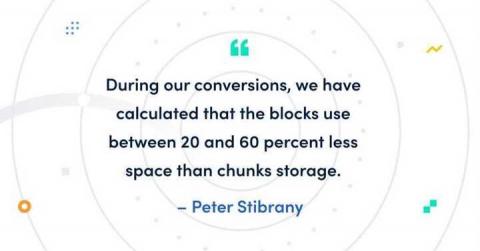
How blocks storage in Cortex reduces operational complexity for running Prometheus at massive scale

Cortex is a long-term distributed storage for Prometheus. It provides horizontal scalability, high availability, multi-tenancy and blazing fast query performances when querying high cardinality series or large time ranges. Today, there are massive Cortex clusters storing tens to hundreds of millions of active series with a 99.5 percentile query latency below 2.5s.

How we're using 'dogfooding' to serve up better alerting for Grafana Cloud

At Grafana Labs, we’re big fans of putting ourselves in the shoes of our customers. So when it comes to building a product, dogfooding is a term we throw around constantly. In short, what it means is that we actually use the products we create throughout their entire life cycle. And I really mean the whole life cycle.

What recent optimizations in the Prometheus storage engine, TSDB, will enable in the future

At the recent PromCon Online, I gave a review of developments in the space of the Prometheus storage engine, TSDB. In this blog post I am going to recap a bit of the talk and add more insights into what these developments will enable us to do in the future. While the talk contained some of the near-future features, I will be diving even further ahead. You can watch the talk here.

Introducing the new and improved New Relic plugin for Grafana

It’s been a while, but the Kelly and Regis of Grafana Labs (a.k.a. Christine and Eldin of Solutions Engineering) are back to report on another Grafana Enterprise plugin: New Relic! The latest version of this plugin will be just one of the many topics we’ll cover during today’s webinar, All about Grafana plugins: Visualizing disparate data sources in one place. We’ll be hosting a great conversation around plugin updates, use cases, and the best way to make coffee.