Should I Trust a SaaS Vendor or Product?
Before adopting any new SaaS (Software-as-a-Service) business tools, the IT department of an organization should evaluate whether it is wise to trust the SaaS product and indeed vendor.
I recently worked on a customer project to migrate an in-house application to the cloud, using a shift-left monitoring and testing strategy. The original application was developed with LAMP architecture and was being migrated to Spring Boot to modernize it and then run it on the cloud. I was fortunate to be part of the conversation during the day-0 talks. Not all IT managers do this.
IT monitoring tools are often complex to license and their licensing models are not always cost-effective. Today, I’ll cover some of the licensing models you may encounter as you evaluate IT monitoring tools. I will also highlight how eG Enterprise licensing makes it a cost-effective, affordable and flexible choice for our customers using our monitoring and observability platform.
Microsoft Azure is one of the most comprehensive and broadly adopted cloud service providers in the industry, offering over 200 fully featured services from data centers globally. A wide spectrum of organizations across all verticals use Azure – to lower costs, become more agile and innovate faster. Tight integrations with the Microsoft ecosystem and product portfolio make Azure highly attractive to many.
Without any ability to self-heal, fixing Citrix usually requires manual intervention to remediate problems. This leads to time spent on mundane tasks managing the care and feeding of Citrix. Automation of these tasks for fixing Citrix provides: In our latest release, eG Enterprise v7.2, we have added new auto-correction and auto-remediation capabilities for Citrix administrators that remove the need for scripting. There are a few issues that can be a cause of constant frustration for admins.
The Garbage Collection (GC) feature in the Java Virtual Machine (JVM) is truly remarkable. It automatically identifies and cleans up unused Java objects without burdening developers with manual allocation and deallocation of memory. As an SRE or Java Administrator you need a strong understanding of the Java Garbage Collection mechanism to ensure optimal performance and stability of your Java applications.
For Software Houses, developers are as important as customers are to a retail organization – if the Developer Experience (DX / DevExp / DevEx) is poor, then work simply will not get done effectively and the best and the brightest are likely to leave for an employer who offers a better experience and hence, more productivity and job satisfaction. Long-term frustrated employees and staff attrition tend to impact product quality and lead to weaker software applications.
Just a quick blog to let you know our new whitepaper “How to Get Full-Stack Visibility for Your Java Applications” is now available, download it here: How to Get Full-Stack Visibility for Your Java Applications | White Paper (eginnovations.com).
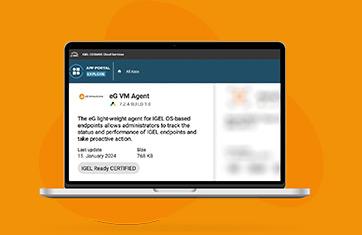
A thin client is a simplified device that relies on a separate server (usually located remotely or in the cloud) to run programs and complete user tasks. It connects to the server through a remote network connection with very little computing happening on an individual user’s device. Because most of the computation occurs and data is stored on the server, thin clients are regarded as a secure efficient option.
Many healthcare providers are modernizing their healthcare application and infrastructure monitoring strategies. Of course, there is never a magic silver bullet and so we publish detailed case studies, with the agreement of some of our customers, for other healthcare IT administrators to gain insights into the factors that drive choices and to allow them to see if there are methodologies or tools they may find useful.