With over 2.5 billion users, Android enjoys a dominant 85% market share in the mobile operating space. It does have one glaring weakness however: enterprise. Most businesses still favor iOS, the operating system of Apple devices like the iPhone and iPad. As part of Google’s bid to secure more of the enterprise market, Android Enterprise is a software platform that provides application programming interfaces (APIs) to developers who build MDM solutions.
Netdata Agent is an open-source monitoring agent capable of collecting metrics from various sources and visualizing them in real-time. It is able to discover and collect metrics with zero configuration, providing a quick and easy way to monitor systems.
The observability landscape is changing fast, as organizations look to deploy applications and separate themselves from competition at a breakneck pace. What are the trends organizations need to be aware of as they make sense of the landscape? Every year, we at Logz.io set out to answer this question by going right to the DevOps and observability practitioners on the front lines.
Managing observability data can feel like a juggling act. Modern cloud applications generate vast amounts of data, and quickly accessing the most important data is a fundamental step toward quickly gaining unobstructed visibility into your infrastructure and applications. Yet, when data volumes grow, complexity follows. Many observability users find it overwhelming to assess the critical data generated from their complex infrastructure and applications.
In this live stream discussion, angel investor Ross Haleliuk joins Cribl’s Ed Bailey to make a big announcement about his new fund to shape the future of the cybersecurity industry. Ross is a big believer in focusing on the security practitioner to provide practical solutions to common issues by making early investments in companies that will promote these values.
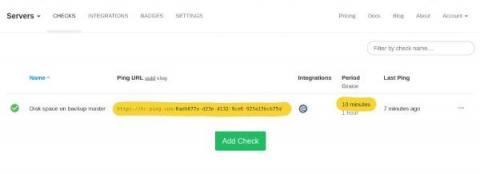
Let’s say you want to get an email notification when the free disk space on your server drops below some threshold level. There are many ways to go about this, but here is one that does not require you to install anything new on the system and is easy to audit (it’s a 4-line shell script).