Calling all Ultra Velocity Teams
Cloudsmith establishes a new era as it introduces the Ultra Velocity Team pricing plans, alongside a new Service-Level Agreement (SLA). Find out more here.


Cloudsmith establishes a new era as it introduces the Ultra Velocity Team pricing plans, alongside a new Service-Level Agreement (SLA). Find out more here.
Imagine you had a way to see exactly what IT issues were impacting your employees. And imagine you had one view showing both issue diagnosis and resolution path, with the possibility to take instant action with a one-click fix? Nexthink’s Digital Experience Score delivers just this by combining hard metrics with user sentiment data to give immediate visibility, context and understanding of employees’ experiences across key areas.
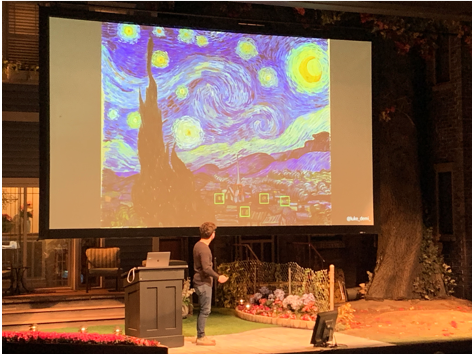
Monitorama is the event of the year if you’re in the monitoring and observability space! It’s an inclusive event for speakers, attendees, and vendors alike to network and learn from each other in a safe, comfortable, and accessible environment.
Pulling in data exposed via API is not one of the most common use cases for ELK Stack users but it is definitely one I’ve come across in the past. Developers wrapping their database services with REST API, for example, might be interested in analyzing this data for business intelligence purposes. Whatever the reason, the ELK Stack offers some easy ways to integrate with this API. One of these methods is the Logstash HTTP poller input plugin.
The reliance on digital transformation and data is ever increasing for businesses to be successful in the current environment. The agility at which the business can respond to real-life situations is proportional to the level of digitization that has been implemented in the business. For a business to nimble and agile, it is imperative that all the processes be delivered as a digital service that can be provisioned, monitored and remediated as by an automation logic at the core of the business.
While deploying updates in large-scale production environments, it can be easy to overlook minor issues that may later turn out to be the cause of major infrastructure problems. To ensure these large deployments are safely rolled out to production, they can be staged in one subset of your environment and then another; for example, once an update is deployed to a subset, it is monitored to make sure everything is fine and then moved to the next subset.
A new monthly feature blog on all things Magecart going on in the news. This summary gives you all the known facts about data breaches reported in the news as well as an insight from our own RapidSpike Security Researcher.
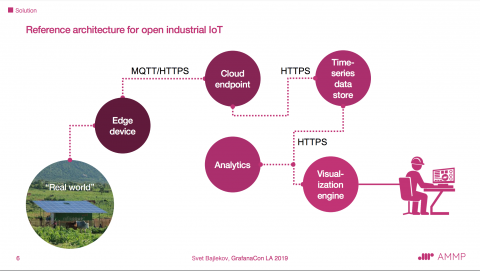
AMMP Technologies runs monitoring for energy systems, usually off mini-grids in Africa. The company uses Grafana to monitor interface with physical objects that are not servers or containers. “It’s interesting how a toolkit for visualizing essentially internet/computer/server metrics is so well-suited to working with real-life streaming data,” AMMP Cofounder Svet Bajlekov said during his talk at GrafanaCon L.A.
We’re delighted to introduce to you Leon Laude, system consultant and knowledge-sharing enthusiast. For our latest special guest blog, Leon has written a thorough step-by-step guide on how to upgrade to SCOM 2019. Having worked on Microsoft products – such as Windows Server, System Center, Hyper-V, Azure, Active Directory – for over 7 years now, Leon has amassed a stack of tips and tricks, and delights in sharing them with fellow SCOM users on thesystemcenterblog.com.
We’re pleased to announce that the Lumigo serverless intelligence platform now supports the Python microframework, AWS Chalice. Chalice was created by AWS to simplify the process of writing serverless apps in Python. Similar in structure to the Flask web framework, Chalice handles much of the configuration on behalf of the user, including automated IAM role policy generation.