The latest News and Information on Monitoring for Websites, Applications, APIs, Infrastructure, and other technologies.
When you build modern cloud-based systems, you usually realize quickly that you need to manage the access to your deployed resources. This is especially true with serverless systems, where you often end up with dozens of resources, even for medium-sized architectures. AWS offers a few services you can use to set up a central entry point to your infrastructure. Elastic Load Balancer, API Gateway, and AWS AppSync. This article will discuss AppSync, AWS’s managed GraphQL service.
Many Icinga users favour the Icinga Director to manage their Icinga configuration. Icinga Director comes with many features to enable you to create and modify Icinga configuration through the web interface. One outstanding feature of Icinga Director is the Activity and Deployment log. It tracks every configuration change and allows you to see who changed what at which time. You can roll back to older versions of your configuration at any time.
An IP (Internet Protocol) address is a numerical label which is used for addressing he location and identification of the network interface for the devices connected to the computer network. The most used and popular IP version is IPv4 which uses 32-bit for IP addresses. Since the IPv4 became popular and the IPv4 addresses are getting depleted, Ipv6 is now used which uses 128-bit for the IP addresses.
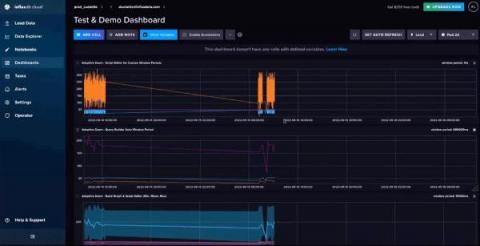
Dashboards allow you to visualize and correlate monitoring data from across disparate data sources, technologies, and infrastructure components to understand what’s going on in your environment. In a growing organization, it’s paramount to standardize how teams build their dashboards to ensure their consistency and legibility.
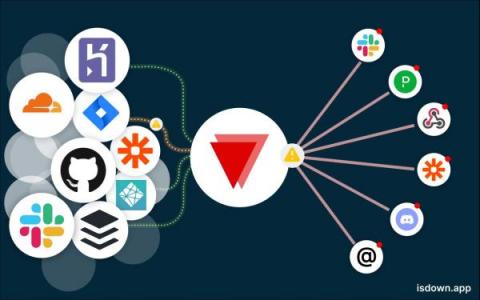
We believe that data speaks volumes and that’s why we’ve put together the most shocking 7 stats that we’ve found from our uptime monitoring report. You have to see them to believe them!
Ben Treynor Sloss, then VP of Engineering at Google, coined the term “Site Reliability Engineering” in 2003. Site Reliability Engineering, or SRE, aims to build and run scalable and highly available systems. The philosophy behind Site Reliability Engineering is that developers should treat errors as opportunities to learn and improve. SRE teams constantly experiment and try new things to enhance their support systems.
IT Infrastructure Monitoring (ITIM) tools like Progress’s own What’s Up Gold are the backbone of any IT Operations monitoring strategy. However, these tools are primarily focused on general purpose visibility across a wide range of infrastructure and systems with an emphasis on operational availability and performance.