Operations | Monitoring | ITSM | DevOps | Cloud

The latest News and Information on Observabilty for complex systems and related technologies.

Broadcom Recognized as Outperformer in the 2023 GigaOm Radar Report for Cloud Observability

We are excited to share that the AIOps and Observability solution from Broadcom has earned a leader position for platform play and maturity in the GigaOm Radar Report for Cloud Observability, 2023. This report reviewed solutions from 20 vendors on 13 criteria, including across such areas as innovation, understanding of emerging trends, solution capabilities and features, and deployment models.

How FireHydrant Implemented Honeycomb to Streamline Their Migration to Kubernetes

Kubernetes is the gold standard for container orchestration at scale. While massive global companies like Google, Spotify, and Pinterest rely on Kubernetes to run their software in production, so do many small but mighty developer teams. (Full disclosure: Honeycomb joined the Kubernetes brigade last year, when we migrated some of our services.)

My Perspective on CloudFabrix Collaboration with the Cisco Full-Stack Observability Platform

I am thrilled that CloudFabrix is a pioneering design partner for Cisco’s Full-Stack Observability Platform (FSO). The Cisco FSO Platform has been designed with a vision of providing a unified observability experience across all application and infrastructure aspects, thereby dismantling silos. The platform’s choice to adopt OpenTelemetry as the protocol for data ingestion via MELT opens up the possibility for comprehensive insights on the complete stack.

Observability in Nutanix AHV environments and Hyper Converged Infrastructures (HCI)

Today, I’ll cover the benefits of monitoring and observability in Nutanix AHV environments and Hyper Converged Infrastructures (HCI) and how observability can help IT teams run cost-efficient, performant Nutanix deployments. Modern enterprises need infrastructures designed for resilience, cost-effectiveness, and application performance. Organizations are adopting hybrid multi-cloud strategies and looking to simplify and optimize on-premises and data center operations.

Multi-Cloud Made Simple: Announcing Kentik Observability Enhancements for AWS and Google Cloud

Limited visibility into network performance across multi-clouds frustrates even the best teams. That’s why we’re thrilled to announce enhanced AWS and GCP support for Kentik Cloud, enabling network, cloud, and infrastructure teams to rapidly troubleshoot and understand multi-cloud traffic.

DNS observability and troubleshooting for Kubernetes and containers with Calico

In Kubernetes, the Domain Name System (DNS) plays a crucial role in enabling service discovery for pods to locate and communicate with other services within the cluster. This function is essential for managing the dynamic nature of Kubernetes environments and ensuring that applications can operate seamlessly. For organizations migrating their workloads to Kubernetes, it’s also important to establish connectivity with services outside the cluster.

Shrink your IT budgets, not your observability needs

Are you getting value for every dollar spent on IT monitoring tools? Amidst the prevailing global economic turbulence, budgets are shrinking, and every dollar spent counts. However, Gartner forecasts a 5.1% growth in worldwide IT spending for 2023. Enterprises implement digital technologies to cope with layoffs and keep their systems up. The million-dollar question is: Is the monitoring output worth the cost of the monitoring solution?

Collecting Kubernetes Data Using OpenTelemetry

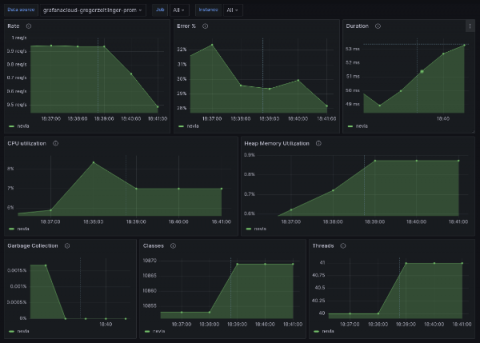
Running a Kubernetes cluster isn’t easy. With all the benefits come complexities and unknowns. In order to truly understand your Kubernetes cluster and all the resources running inside, you need access to the treasure trove of telemetry that Kubernetes provides. With the right tools, you can get access to all the events, logs, and metrics of all the nodes, pods, containers, etc. running in your cluster. So which tool should you choose?

Setting Up a Data Loop using Cribl Search and Stream Part 2: Configuring Cribl Search

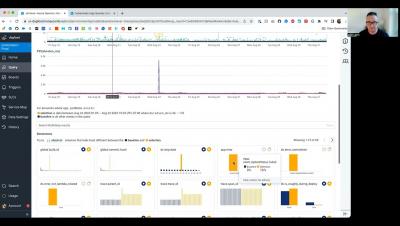
In the second video of our series, we delve into the nuts and bolts of configuring Cribl Search to access the data that we've stored in the S3 bucket. The video guides you step-by-step through the process of configuring the Search S3 dataset provider by using the Stream Data Lake destination as a model for the authentication information. From there, we proceed to walk through the process of creating a Dataset to access the Provider that we've just established. To wrap things up, we demonstrate how to search through the test data that we've previously stored in the S3 bucket.

Setting Up a Data Loop using Cribl Search and Stream Part 3: Send Data from Cribl Search to Stream

The third video of our series focuses on utilizing Cribl Stream to manage data. The presenter takes us through the process of configuring the Cribl Stream in_cribl_http source in tandem with the Cribl Search send operator to collect data. We are able to witness live data results being sent from Search to Stream. Afterward, we demonstrate creating a Route in Stream to direct the incoming data from Search (via the in_cribl_http) Source to the Data Lake by using the Amazon S3 Data Lake Destination. This step employs a passthrupipeline to ensure that the data is not altered in transit.