Operations | Monitoring | ITSM | DevOps | Cloud

The latest News and Information on Observabilty for complex systems and related technologies.

Graph Observability: Honeycomb and Apollo GraphQL With OpenTelemetry

With David Pickavance, Senior Sales Engineer at Apollo GraphQL Learn how to use Honeycomb, Apollo Studio, and Open Telemetry to optimize GraphQL performance for a federated graph. See how to debug a federated GraphQL query across subgraphs and down to the database layer using Honeycomb.

Building Observability in Your CircleCI Deploy

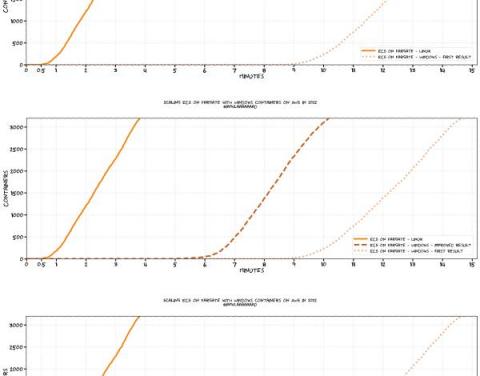
With Liz Fong Jones, Principal Developer Advocate at Honeycomb and Ryan Pedersen, Senior Solutions Engineer at CircleCI In this talk, you’ll learn how Honeycomb keeps its CircleCI workflow duration at about 10 minutes per build through parallelizing build steps, using native container builders per architecture, and tracing execution of the build to know where to optimize.

The 2022 State of Observability Report

Interest in observability is at an all-time high. When we attended KubeCon in Los Angeles in October, observability and security were everywhere—in conversations with attendees and other vendors, during sessions, and in messaging at booths—indicating that there’s still an unmet need. In fact, Gartner declared that observability is at the ‘peak of inflated expectations' in a recent Hype Cycle report.

Metric Correlations using unlimited data for monitoring and observability

Correlate your monitoring metrics to make even better decisions about how to handle incidents in your infrastructure using our Metric Correlations. You can now select an unlimited amount of time to troubleshoot all of your monitoring metrics. Netdata’s free, open-source monitoring agent works with Netdata Cloud to help you monitor and troubleshoot every layer of your systems to find weaknesses before they turn into outages.

HoneyByte: Using Application Metrics With Prometheus Clients

Have you ever deep dived into the sea of your tracing data, but wanted additional context around your underlying system? For instance, it may be easy to see when/where certain users are experiencing latency, but what if you needed to know what garbage collection is mucking up the place or which allocated memory is taking a beating? Imagine having a complete visual on how an application is performing when you need it, without having to manually dig through logs and multiple UI screens.