Operations | Monitoring | ITSM | DevOps | Cloud

The latest News and Information on Observabilty for complex systems and related technologies.

Application observability made easier for Compute Engine

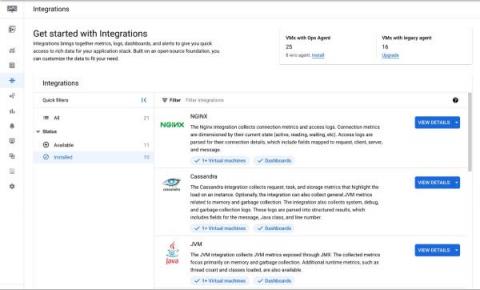
When IT operators and architects begin their journey with Google Cloud, Day 0 observability needs tend to focus on infrastructure and aim to address questions about resource needs, a plan for scaling, and similar considerations. During this phase, developers and DevOps engineers also make a plan for how to get deep observability into the performance of third-party and open-source applications running on their Compute Engine VMs.

A primer to understanding observability

The one certainty you will find in IT, developer, and SRE roles is that things always change! One hot topic in DevOps communities is observability. A long word, you may be wondering what it really means and how you can add it to your skillset. Here’s a quick primer to get you going on your path to observability.

Sponsored Post

AIOps & Observability- Which One Should Enterprises Focus on First?

Organizations today are pressured to keep their IT applications and infrastructure up and running and minimize their downtime. While this has always been a critical goal, it’s become harder to achieve with modern architectures, such as microservices, containerization, edge computing, hybrid-cloud deployments and the newer development methods such as agile DevOps techniques.

Honeycomb Service Level Objectives (SLOs)

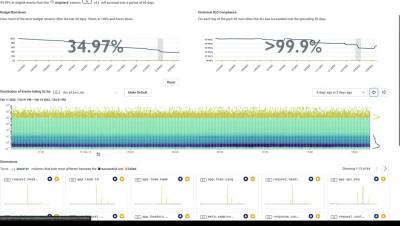
In this 3-minute video, you’ll see how Honeycomb’s actionable SLOs can help you get to the source of an issue faster. Using a real production SLO (latency per-event) as an example, we walk you through what exhaustion time alerts are and how to configure them, as well as how to use a heatmap to investigate and take action when things happen.

A Primer for Monitor as Code: How to use Splunk Observability Cloud with Terraform

Managing the complexities of today’s cloud native infrastructure has resulted in the increased need for observability. As cloud adoption continues to grow, the need to deliver a better customer experience, scale efficiently and increase momentum on innovation has never been more important. For many organizations to carry out these principles, two technologies are helping organizations deliver on these goals faster: Monitoring-as-Code and Infrastructure-as-Code.

How to automate verification of deployments with Argo Rollouts and Elastic Observability

Shipping complex applications at high velocity lead to increased failures. Longer pipelines, scattered microservices, and more code inherently lead to bigger complexity where small mistakes may cost you big time.

Elastic on Elastic - Using Elastic Observability to optimize the performance of detection rules in Elastic Security

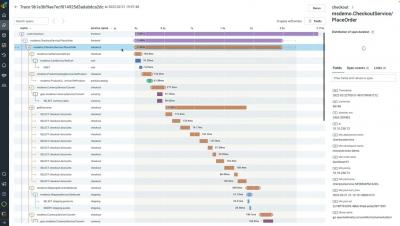
Elastic Security’s developer support team has recently seen a surge in reports from customers about sluggish performance in our UI. Our initial inspection of logs for troubleshooting provided some insights, but not enough for a true fix. Luckily, we have Elastic Observability and its APM capabilities to dive in deeper and look under the hood at what was really happening within Elastic Security. And, more importantly, how we could improve its performance for customers.

A Better Environment for Observability, at Your Service

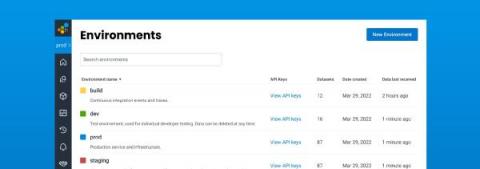
We’ve made some big changes under the hood at Honeycomb to give you better control over how you put your apps data to work—we’ve expanded our core data model with formal Environments and Services! In short, the best observability (o11y) platform in town just got better! Before we dig in, an important note. Existing Honeycomb teams are not impacted by this update. If you’re already a Honeycomb user, congratulations! Your team is now a Honeycomb Classic team.