Operations | Monitoring | ITSM | DevOps | Cloud

Test AI-Generated Code with Real Traffic#aiagents #devops #observability #shiftleft #softwaretesting

AI can generate code in seconds, but testing it against real production behavior is where developers get stuck. Learn how capturing and replaying actual production traffic in development helps you catch bugs before you deploy!

Meet Loom

When something breaks on a large network, the alerts arrive from every direction. Routers, firewalls, cloud gateways, and applications each report their own symptoms. The evidence that explains the incident is scattered across anomalies, configuration changes, topology, and past incidents, and an engineer has to piece it together by hand. Loom is the correlation and root cause agent in Selector Foundry, the agentic NetOps platform built on Selector’s existing AIOps and Observability platform.

What's New in Scout: October 2026

October was about making Scout’s data easier for AI tools to use and easier for your team to trust. Scout is now in Claude’s connector directory, the MCP server got leaner and more careful about what it returns, and Scout Trails opened its beta. Anomaly Detection also became easier to read and better at catching short spikes. Here’s what shipped in October.

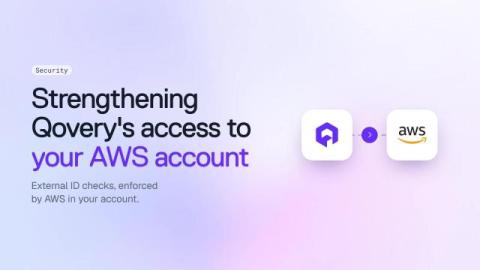
Strengthening the Security of Qovery's Access to Your AWS Account

Qovery now sends your organization ID as the sts:ExternalId when it assumes the IAM role in your AWS account, and the role's trust policy only accepts it on behalf of your organization. Your role is already updated. If you manage it with the qovery-role-creation CloudFormation stack, update the stack to the latest template. Romain is a staff engineer at Qovery working on the control plane and AI integrations. He writes about distributed systems, incident response, and MCP-based tooling.

AI Visibility Checkers for Engineering-Led Teams: 7 Best in 2026

Somewhere in your edge configuration there is a rule nobody remembers writing, and it is deciding whether ChatGPT can read your documentation. That is the thesis of this list: AI visibility, meaning whether assistants such as ChatGPT, Gemini and Perplexity name your product when a buyer asks for one, has become partly an infrastructure problem, and the two failure modes that matter most sit on the engineering side of the house. The first is reachability, because a WAF default that returns 403 to GPTBot or ClaudeBot removes you from retrieval as surely as a robots.txt disallow.

3 Best Companies for Custom Warehouse Software Development

Custom warehouse software exists because off-the-shelf doesn't always cut it. Businesses use it for inventory management, daily operations coordination, and better order fulfillment. Standard warehouse management systems (WMS) cover common processes - but specialized workflows, multiple facilities, complex integrations? Companies dealing with those often need a solution built specifically for them.

Managing Collectors at Scale: OpAMP and Fleet Management (Grafana OTel Community Call #11)

In this episode of the Grafana OTel Community Call, we're joined by Bejal Lewis and Paschalis Tsilias from Grafana Labs to talk about OpAMP, the Open Agent Management Protocol, and what it takes to manage OpenTelemetry Collectors at scale. We'll cover what OpAMP is and why fleet management matters, where the spec stands today (it's still pre-release), and what it was like building production tooling on top of it.

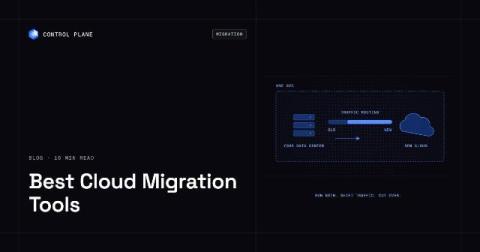
The Best Cloud Migration Tools and Services in 2026

The best cloud migration tool depends on what you are moving, from where, to where, and whether you can afford downtime. Native tools (AWS Transform MGN, Azure Migrate, and Google Cloud Migration Center) move servers into their own cloud. Replication tools move VMs and data with minimal downtime. Kubernetes tools move containerized apps. Platforms like Control Plane let you run the same workloads in the old and new environment at once, so you cut over gradually.