Operations | Monitoring | ITSM | DevOps | Cloud

Why You Need to Closely Monitor Your Exchange Servers

Monitoring your on-prem and hybrid cloud infrastructure has always been important. With an ever-growing rise in cyber attacks, zero-day exploits, and insider threats, keeping track of your infrastructure has a renewed level of significance. Microsoft Exchange is one of the most prominent enterprise systems in use today, with both cloud and on-prem iterations.

How to send traces to Grafana Cloud's Tempo service with OpenTelemetry Collector

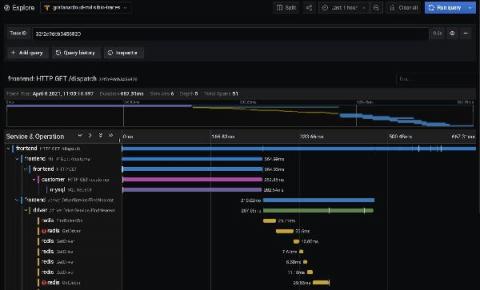
As an open source company, we understand the value of open standards and interoperability. This holds true for Grafana Cloud and our managed Tempo service for traces, which is currently in beta. The Grafana Agent makes it easy to send traces to Grafana Cloud, but it is not required. In fact, Grafana Cloud’s Tempo service is exposed as a standards-compliant gRPC endpoint that conforms to the Open Telemetry TraceService with HTTP Basic authorization.

A Guide to Kubernetes Certifications

In an age of virtualization and cloud computing, developers increasingly use Kubernetes’ open-source platform to manage containerized workloads and services. Kubernetes container became popular because it was impossible to define a resource boundary for multiple applications in a traditional CPU environment. Misuse of resources created an inefficient environment.

It's a Mad, Mad, Mad, Mad Multipath World

Picture a network—any enterprise network. What do you see? In almost every case, in almost every environment, you’ll find hubs and spokes of hubs and spokes all the way down. For network engineers, their focus may be even more narrow: innumerable clients, lots of switches, and fewer routers connected to a core. This classic on-prem topology has served reliably since the dawn of Unix time.

Optimizing Load Times on Apache Web Server on Digital Ocean With SolarWinds Pingdom

Introduction We all want the fastest application possible for our customers. At the same time, we’re under pressure to continuously add new features. These new features add complexity, which makes our application heavier, which in turn slows our applications down. So, how do we add new features, yet keep the performance of our application high?

The Cost of IT Downtime: An Overview

As the adoption of cloud computing continues to encourage innovation across industries, high-performing and resilient systems have become a necessity in order to keep pace with the competition and meet internal/external SLAs (service level agreements). In terms of customer expectations, a minute of downtime can mean thousands of dollars in lost opportunity and a soiled customer relationship. So what exactly is downtime?

Endpoint Security Data Collection Strategy: Splunk UF, uberAgent, or Sysmon?

Many threats originate from the endpoint and detecting them requires insights into what happens on the endpoint. In this post we look at different endpoint activity data sources, comparing the benefits and capabilities of Splunk Universal Forwarder with vast limits uberAgent and homegrown solutions.

Department of Defense Designates Splunk a Core Enterprise Technology

Last month, as part of its continuing efforts to acquire and secure advanced technology for cyberdefense, data analytics and other mission critical operations, the Department of Defense (DOD) designated the Splunk Enterprise Software Initiative (ESI) Blanket Purchase Agreement (BPA) as a Core Enterprise Technology Agreement (CETA). Of the 100+ OEMs that have been awarded a DOD ESI BPA, only seven have been selected for CETA designation by the DOD.