Operations | Monitoring | ITSM | DevOps | Cloud

What is an enterprise hybrid cloud?

Cloud computing offers a scalable, flexible, and adaptable way for your organisation to manage its IT infrastructure. It can reduce your running costs, enhance security, and ensure that your employees have access to the resources and digital tools they need to work effectively. But no single implementation of cloud computing will be identical. Many enterprise cloud approaches will be bespoke and hybrid, combining both public and private cloud solutions with on-premise infrastructure.

Building a Persuasive Business Case for Automation: A Comprehensive Guide

In today’s increasingly complex and rapidly evolving business landscape, the integration of automation technologies has become a crucial strategy for organizations aiming to enhance efficiency, reduce costs, and stay competitive. However, convincing stakeholders and key decision makers to invest in IT automation initiatives requires more than just highlighting its potential benefits.

Instrumenting using the Java OpenTelemetry OTLP

Java has long been a foundational pillar in application development, its versatility and robustness serving as key drivers behind its widespread adoption. Since its inception, Java has evolved to meet the ever-changing demands of scalable deployments, offering a reliable platform for creating everything from web applications to complex, server-side systems.

My Favourite Feature of SQL Prompt - TJay Belt | Redgate

TJay Belt, Director of Data at Nerd United, shares his favourite feature of SQL Prompt. SQL Prompt enables users to write high quality SQL faster. As well as autocompleting your code, SQL Prompt takes care of formatting, object renaming, and other distractions, so you can concentrate on how the code actually works..

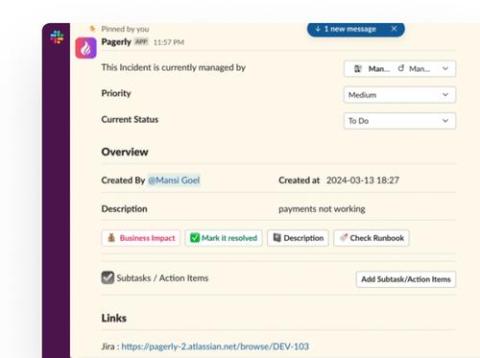
Build More Resilient Operations with PagerDuty Incident Management

Mitigating business risk is a key enterprise priority. To avoid unnecessary exposure to the business, technical teams need a proactive approach to managing incidents. While this is a well-known challenge, it’s also much easier said than done. Over the years, many organizations have cobbled together their own bespoke processes for managing different types of incidents.

How to choose your software reliability metrics

Reliability metrics in software development are metrics that help teams quantify how dependable and consistent their software systems are over time. By converting a wide range of technical properties into hard data, these provide quantifiable information to understand the probability of software running failure-free in a given environment over time. These metrics are a subset of developer-focused key performance indicators (KPIs), data that is gathered to emphasize developers' output.