Operations | Monitoring | ITSM | DevOps | Cloud

The latest News and Information on Software Testing and related technologies.

SASE: A Long-term Play for Security

Secure Access Service Edge (SASE) is a strong trend emerging in enterprise network security, representing the long-term capability to integrate and consolidate a variety of networking and cybersecurity tools. Let’s do a quick dive on the technology to understand why it’s necessary. SASE emerged as an outgrowth of the software-defined wide-area networking (SD-WAN) technology movement, which made it easier to configure, orchestrate, and manage WAN connectivity from enterprise branches.

How to test for expired TLS/SSL certificates using Gremlin

Transport Layer Security (TLS), and its preceding protocol, Secure Sockets Layer (SSL), are essential to the modern Internet. Encrypting network communications using TLS protects users and organizations from publicly exposing in-transit data to third parties. This is especially important for the web, where TLS secures HTTP traffic (HTTPS) between backend servers and customers’ browsers.

The Role of Traffic Replay in Production Traffic Replication

Testing in production is one of the most effective—and risky—ways of testing. The ability to use real-world conditions ensures reliability of tests, as no bugs can appear as a result of misconfigurations of the environment. However, using the same environment as your users also has an obvious downside: any bugs discovered by testing will immediately affect users.

Maximizing Value with Database Testing

The foundation of software development is rooted in the handling and preservation of data in compliance with the goals of the application. The core of any software program is the information stored in databases that is used for retrieval and manipulation. To ensure that the chosen database system (whether SQL or Non-SQL) is suitable for the needs of the application, it’s important to conduct tests to evaluate its capabilities.

Best practices for continuous testing with Datadog

In Parts 1 and 2, we looked at how you can build and maintain effective test suites. These steps are a key part of ensuring that application workflows function as expected. But how you run your tests is another important point to consider, so in this post, we’ll walk through best practices for executing your tests across every stage of development. Along the way, we’ll also look at how Datadog supports these practices for the applications that you are already monitoring.

Best Advice To Address Software Development Challenges

Software development is inherently challenging, with complexities like time constraints and lack of resources. The ever-evolving business needs make it even more daunting for developers to create solutions that address them effectively. The worst part is that minor errors in your code may affect the usability and success of the end product. Moreover, you may not realize their presence until the end. But navigating these challenges is easy, provided you take a strategic approach from the outset of the project. Let us share some valuable advice to address the common software development challenges.

How to Bypass TOTP-Based 2FA Login Flows With Playwright

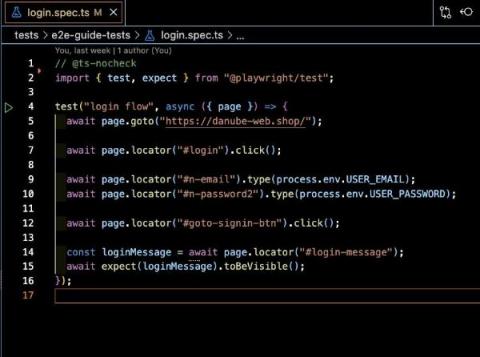
Testing applications behind a login flow is cumbersome. And it gets even worse when there’s two-factor authentication (2FA) involved. Many people work around this problem by disabling it or implementing wild hacks. Automating a 2FA-based login flow is just too hard! I thought that for a long time, too. But I must admit — I was wrong.

Sponsored Post

The Role of Kubernetes in Production Traffic Replication

Organizations are starting to realize that simply writing tests to generate traffic is simply not good enough. Rather, production traffic replication is now necessary, where you record traffic from your production environment and then replay it in your development environment. To match the modern principles of this testing methodology, it makes sense to also utilize modern infrastructure, like Kubernetes. Some benefits of using Kubernetes for production traffic replication are the ability to: Additionally, load generators are ephemeral. These reasons-and a few more besides-will be covered later in this post, but let's first take a deeper look at what production traffic replication is.