Operations | Monitoring | ITSM | DevOps | Cloud

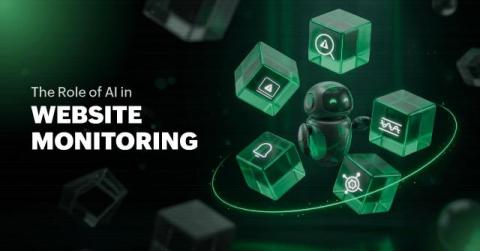
The role of AI in website monitoring : How AI is rewriting the rules of website monitoring

A peak sale season, missed transaction or availability issues, spiking customer tickets, and unhappy customers. Well, you know the trope. A few years ago, this was just part of doing business online. Today, it’s a problem you can avoid, thanks to artificial intelligence. We’ve quietly reached an important turning point in website monitoring. For most of the internet’s history, monitoring meant setting thresholds: set a number, wait for it to be crossed, get an alert, and fix the issue.

Recurring Office Hours with the AI SRE Agent Team Behind AURA

Building an agent and not sure how to approach something? Bring it. AURA office hours are recurring working sessions with the people who build it. The team has been talking to people trying out AURA and hearing the same good questions come up more than once. Office hours are the answer to that: a standing slot on a schedule, rather than one conversation at a time. The format is deliberately loose. Nobody is arriving with thirty slides to spend an hour talking at you. The session goes wherever the questions go.

When to Use Grafana Assistant vs. MCP vs. gcx: Part 3

When should you use gcx? If Grafana Assistant is the brain and Grafana MCP is the easy hand, gcx is the power hand. Built for AI agents working in the terminal, gcx gives them deep access across Grafana Cloud—so they can pull telemetry, verify code, automate workflows, and access places MCP doesn’t. Coding agents? gcx. Need the full Grafana Cloud surface? gcx. Automating in CI/CD? gcx. Here’s where it fits, and when to use it — explained by Nicole van der Hoeven.

Why AI Agent Orchestration Needs Runtime Context Between Agents

Every multi-agent system depends on one agent handing its output to the next, and nothing in the architecture confirms that the handoff carried what it should have. Orchestration adds a failure surface that single-agent architecture doesn’t have: a point between every two agents where one has to trust that the other passed along everything it needed, unverified.

Run Playwright Tests with Harness AI Test Automation | CI/CD + AI Failure Analysis

End-to-end testing should not slow your delivery pipeline down. But for many teams, Playwright test suites still live in disconnected jobs, produce noisy failures, and make it hard to tell whether a failed test is a real regression, a flaky test, or just another false positive. In this walkthrough, Shibam Dhar, DevRel Engineer at Harness, shows how Harness AI Test Automation helps teams run, analyse, and trigger Playwright tests directly from their software delivery workflows.

AI finds vulnerabilities faster than you can fix them

If an AI model can find a vulnerability for an attacker, the same model should help a defender fix it. In practice, the math doesn't favor the defender. This quick video digs into the real asymmetry AI-powered vulnerability discovery creates: The goal is models acting as tools for defenders, not weapons for attackers. Getting there means rethinking how much ground your team can realistically cover on its own.

AI cost governance: policies to control AI spend

AI cost governance is the set of policies and controls that keep AI spend predictable and attributable: budget caps and token quotas set before deployment, prompt caching to cut repeat token costs, hard limits on reasoning steps and tool calls, and unified allocation so every dollar maps to a team, feature, or customer. Governance fails when it's advisory. It works when the caps are enforced in the platform and someone owns the number.

Dataset Bias in Computer Vision: How to Audit Human Image Data

Dataset bias in computer vision cannot be evaluated from one demographic percentage. The distribution available to a model is shaped by where images came from, how subjects entered the collection, which examples were retained, how labels were defined, what visual conditions were represented and how evaluation data was constructed. A useful dataset bias audit therefore examines the complete data pipeline.

How AI Is Turning Job Search Into an End-to-End Digital Workflow

Job searching used to be a loose collection of tasks: a few bookmarked roles, a resume file named "final_FINAL," and a handful of half-finished applications spread across tabs. Now, it's starting to look more like an actual workflow-one with inputs, outputs, checkpoints, and iteration. That shift is partly driven by AI tools that help candidates move from "I should apply" to "application sent" with fewer dropped steps. Platforms like ResumeCoach are part of that wider trend: not just creating documents, but helping people build a repeatable process they can run again and again.

Building AI SRE Agents, Part 2: Leave the Laptop, Earn Trust

Moving the agent off your machine and pointing it at real clusters — read-only, in shadow mode — then climbing a trust ladder toward carefully scoped action. This is the second article in a three-part series on taking an AI SRE agent from a weekend experiment to enterprise production. Part 1 built a local agent on a throwaway cluster: read-only, propose-only, refined against a small eval set, with portable skills and no production write access.