Operations | Monitoring | ITSM | DevOps | Cloud

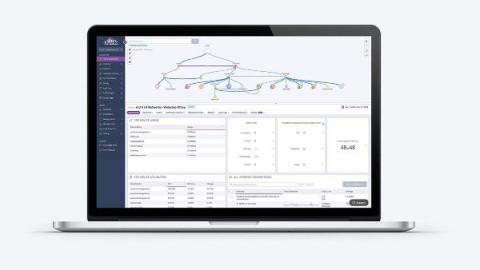
Dynamic MCP Server Demo | Connect AI Agents to Enterprise Automation with Resolve Actions Pro 8.1

Learn how to create and deploy a Dynamic MCP Server in Resolve Actions Pro 8.1 and securely expose enterprise automation to AI assistants using the Model Context Protocol (MCP). In this walkthrough, you'll see how to configure an MCP server, publish automation runbooks, connect to Claude Desktop, and execute enterprise workflows directly from an AI assistant. With Dynamic MCP Servers, organizations can make existing automation instantly accessible to AI agents without rebuilding workflows.

AI vs. AI: from alert fatigue to agentic cybersecurity

AI is transforming cybersecurity on both sides of the battlefield. Attackers can now launch highly personalized phishing campaigns at scale and build malware capable of making autonomous decisions. At the same time, security teams are using AI agents to investigate alerts, reduce noise, and respond to threats faster. In this episode of Humans of Reliability, we speak with Nir Soudry, Head of R&D at 7AI, about the shift from alert fatigue to agentic cybersecurity.

The AI Factor You're Ignoring: Employee Behavior

One of the most important realizations emerging across enterprise AI governance discussions is that most risky AI behavior is not malicious. Employees are typically trying to work faster. They are trying to summarize documents, accelerate research, draft communications, analyze spreadsheets, or automate repetitive tasks. In many cases, employees may not fully understand how AI providers handle uploaded information, what data policies apply, or where organizational compliance boundaries actually exist.

Building a Website with AI: What You Should Know First

The age of artificial intelligence is here, and it has already made many types of otherwise time-consuming tasks that much easier. For some, that includes building a website. Building a website from scratch takes some serious time (and talent, of course). While AI can't take all the creativity out of your hands, it can act as a tool to help you achieve the website's end result that much faster. Of course, overreliance is not the answer, though. So, to get it right, here's what you should know before you start building a website alongside AI.

Stop switching tools to find answers: Grafana Assistant now works across 30+ data sources

When you're the on-call engineer and something breaks, you can quickly find yourself deep in a series of tools you don't regularly use—switching tabs, copying query results, and manually stitching together a picture of what's happening and why. People are increasingly turning to AI to get around this, but the results can be a mixed bag.

An SRE agent for production

AI has changed how software gets built. It hasn't changed how software gets run. Most of the AI money in software has gone into the IDE: code generation, copilots, developer assistants, faster pull requests. That work matters. But writing software is one slice of the lifecycle. The harder problem, and the more expensive one, is running that software in production. Production is where systems fail in ways nobody predicted. Incidents don't stay inside one service.

We built an SRE bot on AURA. Here's what we learned.

PagerDuty fires. You open the incident. Title, timestamp, nothing else. Whatever context exists is in someone's head, in a Slack thread from two weeks ago, or in a runbook nobody has touched since the last reorg. We got tired of that. So we put an AURA agent behind a Slack bot and pointed it at our own production environment.

Poisoning The Pipeline: How The Mastra AI Ecosystem Was Poisoned At The Registry Level | Harness Blog

The open-source landscape has witnessed another highly automated, ecosystem-level subversion. On June 17, 2026, a critical software supply chain attack struck the Mastra AI framework - a popular open-source TypeScript ecosystem used widely to build AI agents, workflows and RAG pipelines. By exploiting a compromised contributor account, threat actors successfully mass-published 144 malicious packages under the official @mastra npm scope.