Splunk for AIOps
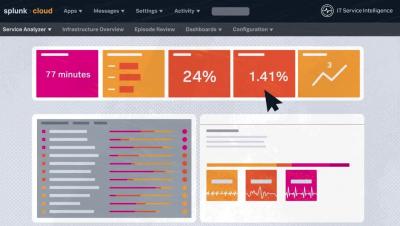
Learn how customers are using Splunk IT Service Intelligence (ITSI) for predictive alerting and KPI-driven service monitoring, to reduce unplanned downtime by 60% and alert noise by 95%.


The latest News and Information on AIOps, alerting in complex systems and related technologies.
Gartner introduced the word ‘AIOps’ back in 2017, and ever since, the enterprises have been adapting to the various strategies to streamline their IT operations. AIOps is a successful venture because it meets the challenges and tackles the amount of data created in the tech infrastructures amid complex architectures.
Making IT operations simpler – which AIOps does by helping teams to make smarter, more informed decisions about complex monitoring and APM problems – is great. But what would be even greater is eliminating the need for IT teams to make decisions at all – a prospect known as NoOps. By automating application management to the point that human involvement is no longer necessary, NoOps offers tantalizing possibilities for the IT operations teams of the future.
To date, AIOps has been a solution first and foremost for IT operations teams. In other words, AIOps has been used primarily to help IT teams manage what happens in the post-deployment part of a CI/CD pipeline, when they need to detect and remediate issues in production environments. That doesn’t mean, however, that AIOps leaves developers out of the picture. Although the conversation surrounding AIOps hasn’t paid a lot of heed to developers so far, it’s perhaps time to change that.
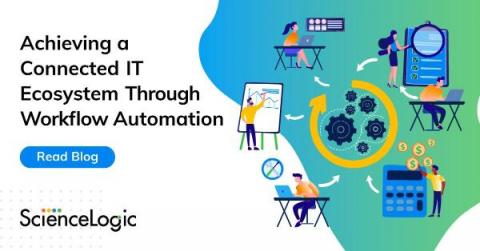
This blog outlines how the ScienceLogic SL1 platform kick starts your automation journey with automated workflows - your next step toward AIOps.
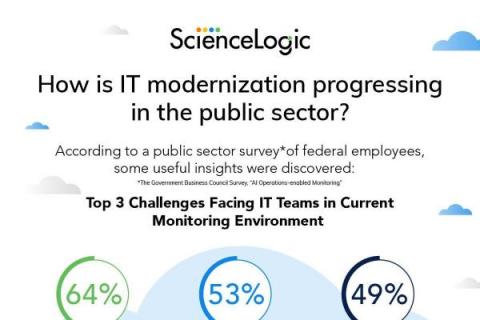
According to a public sector survey of federal employees, some useful insights were discovered.
Modern workflows are primarily aimed at one thing—reducing operational complexities so that stakeholders can focus on initiatives that boost business and innovation. For IT teams, Artificial Intelligence and Machine Learning play key roles in bringing this goal to life. And even though AIOps is considered to be not yet in mature stages, there is no denying that IT teams that do not adopt AI processes will be left behind. By 2023, the market for AIOps tools is predicted to reach $11.02 B.
As an idea conceived by Gartner four years ago, AIOps is already a mature practice. But it is also one that continues to evolve as businesses turn to AIOps to support new use cases, and as AIOps vendors build better and more efficient AIOps tools. That fact begs the questions: what’s next for AIOps? What are the relevant trends that will shape the future of AIOps over the next several years, and how will AIOps use cases evolve going forward?
With the ScienceLogic SL1 platform correlating and contextualizing data to generate actionable events that accurately reflect the issues that need attention, how do you make sure all your engineers and system admins are on the same page?