Optimize your cloud data infrastructure spend with Aiven's Bring Your Own Cloud (BYOC)
Achieve lower TCO and keep full control of your data with Aiven’s Bring Your Own Cloud deployment option.


In a recent blog post, we discussed how ChatGPT and Elasticsearch® can work together to help manage proprietary data more effectively. By utilizing Elasticsearch's search capabilities and ChatGPT's contextual understanding, we demonstrated how the resulting outcomes can be improved. In this post, we discuss how users’ experience can be further enhanced with the addition of facets, filtering, and additional context.
In the data business, we often refer to the series of steps or processes used to collect, transform, and analyze data as “pipelines.” As a data scientist, I find this analogy fitting, as my concerns around data closely mirror those most people have with water: Where is it coming from? What’s in it? How can we optimize its quality, quantity, and pressure for its intended use? And, crucially, is it leaking anywhere?
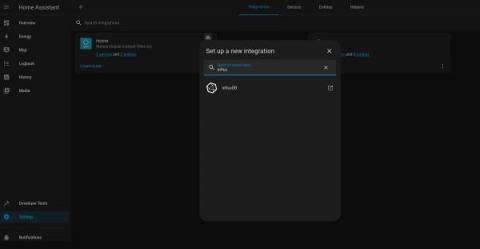
This post covers how to get started with Home Assistant and Grafana, including setting up InfluxDB and Grafana with Docker, configuring InfluxDB to receive data from Home Assistant, and creating a Grafana dashboard to visualize your data. It provides a comprehensive guide for real-time monitoring and analysis of Home Assistant data. In this tutorial, you’ll learn how to integrate Grafana with Home Assistant using InfluxDB.
This post was written by Siddhant Varma. Scroll down for the author’s bio. Observability is an essential aspect of a healthy software architecture and a highly performant system. It enables developers and engineers to understand and dive deeper into how their application behaves. This in turn helps them monitor it effectively.