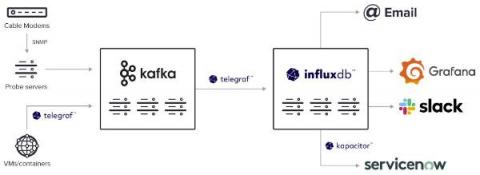
Continuing in our series of InfluxDays recaps, we turn our attention to Brian Gilmore’s presentation on Industrial IoT. This is an area that uses time series data extensively and has a lot of room to expand the way it uses this data. Here’s a quick breakdown of where things stand today.
Most customers running Kubernetes clusters Amazon EKS are regularly looking for ways to better understand and control their costs. While EKS simplifies Kubernetes operations tasks, customers also want to understand the cost drivers for containerized applications running on EKS and best practices for controlling costs. Anodot has collaborated with Amazon Web Services (AWS) to address these needs and share best practices on optimizing Amazon EKS costs.
Time series data often comes in large volumes that need to be handled carefully to produce insights in near real time. We’re constantly moving through time. The time it took you to read this sentence is now forever in the past, unchangeable. This leads to something unique about data with a time dimension: It can only go in one direction. Time series data is different from other data for many reasons.
At our recent InfluxDays event, Gary Fowler discussed the current state of scripting and query language support in InfluxDB. This is an aspect of the platform undergoing constant development, so here’s a quick recap of what Gary went over.