Operations | Monitoring | ITSM | DevOps | Cloud

The latest News and Information on Cloud monitoring, security and related technologies.

Leveraging AI for Predictive Analytics in Observability

Predictive analytics has become a key goal in observability. If teams can foresee potential system failures, performance bottlenecks, or resource constraints before they happen, they can act preemptively to mitigate issues. AI holds the promise of making this possible. In this post, we explore how AI can push observability toward predictive analytics, the industry’s current hurdles, and practical use cases for leveraging AI today.
Getting transparency on hidden Azure Function Integrations

Recently we released a new feature for Business Activity Monitoring and one of our customers was able to get almost immediate value from this feature with an integration use case they were struggling to support. The solution implemented involves the source data coming from various operational technology systems that push data to an event hub.

End-to-end tracking for Azure APIM

In the video, Michael Stephenson discusses the Business Activity Monitoring (BAM) data queries feature and its integration with API management, emphasizing its role in enhancing operational insights. He explains how the tool allows users to query both App Insights and Log Analytics, enabling the creation of user-friendly views for non-technical users, such as support operators.

Cloud Engineer - Roles and Responsibilities

Cloud engineers have become a vital part of many organizations – orchestrating cloud services to create seamless digital experiences for clients. With responsibilities spanning across cloud security to troubleshooting incidents, cloud engineers are key to keeping modern businesses running efficiently. And as the need for cloud expertise continues to rise, so do opportunities in the field.

How to quickly configure Grafana Cloud Application Observability with Open Telemetry Operator

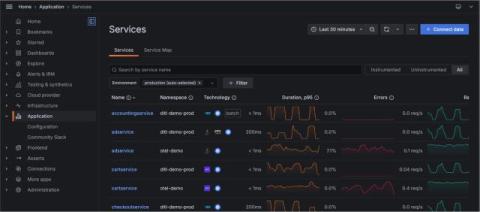
Monitoring application health is a lot like monitoring your personal health. Vital signs such as heart rate, blood pressure, and overall well-being can spot problems before they escalate, helping us maintain good health. Similarly, application health requires constant monitoring of performance indicators like CPU usage, memory consumption, and application response times.

Stronger together: Sumo Logic and AWS partnership expands with five new competencies

For over a decade, we’ve worked closely with AWS to help our joint customers ensure the health and security of their mission-critical applications. That’s why we’re so excited to have recently renewed our Strategic Collaboration Agreement (SCA) with AWS and to announce five new AWS competencies across multiple industries.

How to Migrate MySQL Database to Amazon RDS or Aurora

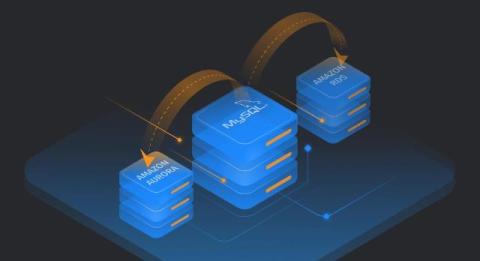
Amazon cloud storage offers a scalable and secure way to keep and access data across multiple devices. As to Amazon RDS (Relational Database Service), it provides automated backups, software patching, and scaling without the need for manual intervention. In this guide, we are going to walk you through the process of transferring a database from a local machine or a traditional server to AWS with the help of the command line as well as with a convenient GUI – dbForge Studio for MySQL.

AWS vs GCP vs Azure: Which Cloud Platform is Best for your Business?

Are you a startup struggling to choose the right cloud platform for your business? With so many options available, it can be overwhelming to determine which vendor best suits your needs. This article will compare AWS, GCP, and Azure based on key factors such as pricing, compliance, security, scalability, ease of use, and their specific benefits for startups. After you have gone through this article, you will have a clearer understanding of which cloud platform is the best fit for your business.

Azure Logic Apps Consumption: The Ultimate Tool for Business Data Tracking

In the latest release of Turbo360, significant improvements have been made to the Business Activity Monitoring (BAM) module. This module is designed to shift support “left,” meaning it empowers support operators to identify and address issues earlier in the process by providing them with a business-friendly view of the underlying complex infrastructure.

15 Cloud Business Intelligence Tools: Organized By Category

Data overload. Poor decision-making. Inefficient processes. Limited real-time insights. These are just a few of the many challenges an organization would face without business intelligence (BI). Yet traditional BI has its own set of challenges, including complexity, cost, data diversity, and more. These limitations have led businesses to seek a more affordable and efficient solution — the cloud. This article explains cloud business intelligence (cloud BI), how it works, and its benefits.