Operations | Monitoring | ITSM | DevOps | Cloud

The latest News and Information on Containers, Kubernetes, Docker and related technologies.

Global Online Meetup - January 2022 - SUSE's Cloud Native Security Roadmap 2022

In the January Global Online Meetup we look at our Cloud Native Security Roadmap for 2022. We're covering: Hosted by Tim Irnich, Director Technical Evangelism, SUSE & Rancher Community, with panelists: Our Global Online Meetups provide an inside view into the latest and greatest of SUSE technology. Our colleagues from Engineering & Innovation present their newest ideas and projects and are eager to hear feedback from our community.

Rancher Desktop 1.0.0 Has Arrived

We are happy to announce the 1.0.0 release of Rancher Desktop. This release has been months in the making since development on Rancher Desktop began. After starting small and learning what users needed, we were able to adjust its path and develop the features needed for a 1.0.0 stable community release. But wait – what is Rancher Desktop again? It’s an open source app for desktop Kubernetes and container management on Mac, Windows and Linux.

The Business Case for Docker Adoption

Container technology is considered one of the most rapidly evolving in the software industry's recent history. There has been a seismic shift towards more and more organizations adopting containerization for their applications. Containers offer a lightweight, portable, and more efficient alternative to virtual machines and help us run software securely and reliably across different server environments.

My First Impressions with SUSE Rancher Kubernetes Projects

I recently started working at SUSE. Before joining SUSE, my Kubernetes experience included vanilla Kubernetes, AKS and EKS but mostly OpenShift and Red Hat Advanced Cluster Management. I worked in technical pre-sales, so I knew about Rancher, K3s and RKE and their key features but I never spent time with them. When I joined SUSE, I started testing Rancher, Rancher Desktop, K3s, k3d and RKE2 and I had a great time with them. First things first, I will

Monitoring AWS Spot instances using Sumo Logic

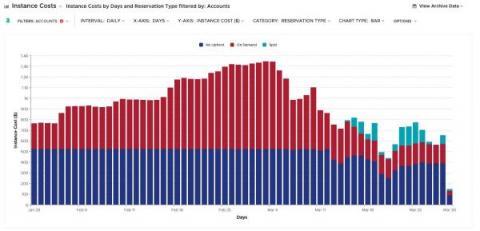
Spot worker nodes on EKS (Elastic Kubernetes Service) are a great way to save costs by allowing customers to take advantage of unused capacity. With Sumo Logic, we have experimented with and adopted spot worker nodes for some of our EKS clusters to see if we can pass along the same benefits. We decided to share some of the learnings, challenges, and caveats with using spot instances along with the monitoring setup.

How to become HIPAA compliant on AWS in 2022?

Since the 90s, when you run a company in the Healthcare industry in the US market, you must comply with the Health Insurance Portability and Accountability Act (HIPAA) Security Rule. Some of the security rules are directly linked to how you operate your organization, the others how you manage your application data for your customers. This article will walk you through what to consider on AWS to be HIPAA compliant in 2022.

Why Heroku and AWS have failed to serve modern developers?

Heroku Vs. AWS remains a long and persistent debate among developers. Both platforms have strengths and weaknesses. Over the last 10 years, Heroku and AWS played a huge role in the cloud hosting and software development industry, by significantly unlocking productivity in a way that it has never been reached before. They are the platforms behind most of the successes from the last decade. However, we are in 2022 and it still looks like if we (developers) were in 2010 to deploy our apps in the cloud.

Introducing Cycle's Support of Google Cloud Platform

Our goal has always been to automate and standardize the management of infrastructure and deployment of applications across user infrastructure. Today, we are excited to announce that we've launched support for Google Cloud (GCP), expanding our natively supported providers list and further expanding the choice, flexibility, and reach the platform offers to current and new users. With this new integration, users can deploy, manage, and scale their containerized workloads to GCP compute infrastructure.

Efficient Container Monitoring with Pepperdata

Container monitoring strategies and purpose-built container monitoring tools just may be the next hot topics swirling around the Kubernetes discussion forums this year. Over 77% of IT professionals expected to migrate 50% or more of their workloads to containers with Kubernetes by the end of last year. With the rise of container usage growing, having the ability to monitor the performance of your containerized workloads is critical.