The latest News and Information on Containers, Kubernetes, Docker and related technologies.
Let’s face it – Kubernetes can (and is) oftentimes very complex. This means that you’re bound to make a cluster configuration mistake along the way – apart from it impacting your cluster’s performance and security, it can also heavily affect your ability to enforce visibility and troubleshooting. There is, however, a light at the end of the tunnel.
As you already know, the “What’s new in Sysdig” blog team is involving more and more people, and this month is up to me, Giulio Puri. I’m based in Milan, Italy, and I’ve been part of the Sysdig EMEA team since May, 2021 as a Sales Engineer. I’m passionate about technology, innovation and cybersecurity, and in my free time, I love to cook, experiment with recipes and – not always successfully – surprise my friends with new dishes.
You know that observability plays a crucial role in helping to manage today’s distributed, cloud-native, microservices-based applications. But you may be surprised to learn that – despite its close association with modern applications – observability as a concept was born more than a half-century ago. Its origins stretch all the way back to the late 1950s, long before anyone was talking about microservices and the cloud.
Multipass exists to bring Ubuntu-based development to the operating system of your choice. Whether you prefer the GUI of macOS (even on M1), Windows or any other Linux, the unmatched experience of developing software on Ubuntu is there at your fingertips, just one “multipass launch” away. Today, the Multipass team is delighted to enhance this experience for developers working with containerised applications!
Bare metal Kubernetes is a powerful set of technologies that builds on the best ideas behind the public and private cloud, yet abstracts away some toilsome aspects related to virtualisation management and networking. For operators and users, it provides significant benefits, making it easier and faster to ship and maintain complex, distributed applications.
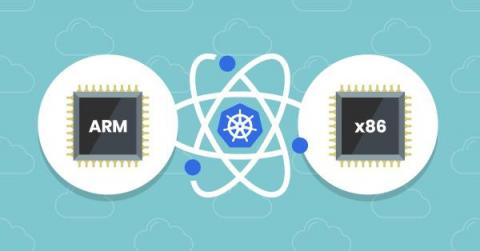
Central processing units (CPUs) can be compared to the human brain in that their unique architecture allows them to solve mathematical equations in different ways. x86 is the dominant architecture used in cloud computing at the time of this writing; however, it is worth noting that this architecture is not efficient for every scenario, and its proprietary nature is causing an industry shift toward ARM.