Operations | Monitoring | ITSM | DevOps | Cloud

The latest News and Information on DevOps, CI/CD, Automation and related technologies.

How Preview Environments help developer teams scale up?

Many tech startups experience rapid growth. This means they have to scale, develop many new features quickly, and find the best talent to grow significantly. Whether your team is already big or still small, let’s see how Qovery can help you manage the scale-up with the Preview environments!


Gaining a competitive edge with database monitoring

I was recently joined by Chris Yates, Senior Vice President, Managing Director of Data and Architecture at Republic Bank for our webinar, Gain the competitive edge with a monitoring tool. The session sparked an insightful conversation around estate monitoring from the perspective of a Senior VP, and I wanted to share some of the key take-aways.

How To Present ROI On Cloud Computing To The C-Suite

When each quarter’s financial report lands on the desks of a company’s C-Suite executives, those execs are essentially looking at a black box of spending and revenue. They can see the total numbers and the growth or shrinkage of certain categories, but they ultimately have very little context into why each number is as high or low as it is. Without this context, it’s all too easy to feel sticker shock over a seemingly outrageous cloud bill and demand that costs be cut at once.

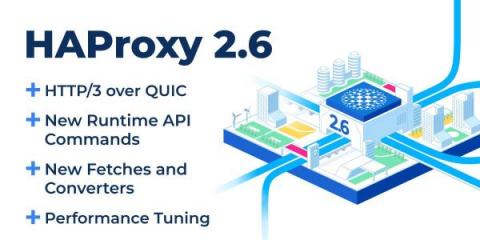
Announcing HAProxy 2.6

HAProxy 2.6 is now available! As always, the community behind HAProxy made it possible to bring the enhancements in this release. Whether developing new functionality, fixing issues, writing documentation, QA testing, hosting CI environments, or submitting bug reports, members of our community continue to drive the project forward. If you’d like to join the effort, you can find us on GitHub, Slack, Discourse, and the HAProxy mailing list.

Survey: Are You Using an Observability Solution, Implementing One, Actively Planning for it or Thinking About it?

Whether you’ve just started your observability journey or haven’t started one at all, Techstrong Research is here to help the industry gain insights into observability with their “Observability at the Speed of Innovation 2022” survey, sponsored by StackState. Techstrong Research, an industry analyst and consulting group focused on the business outcomes of disruptive technologies, is researching where organizations are in their observability journey.

6 must-have features in network configuration management

Network configuration management is a function that comprises assortment, monitoring and storage of information about every component that forms a network. The true purpose of such a solution is to come alive in time of any eventuality; it could be the need to update, upgrade, recover or could even be disaster management. The solution will provide all pertinent information at the hands of the IT operations team, enabling them to decide the course of action going forward.

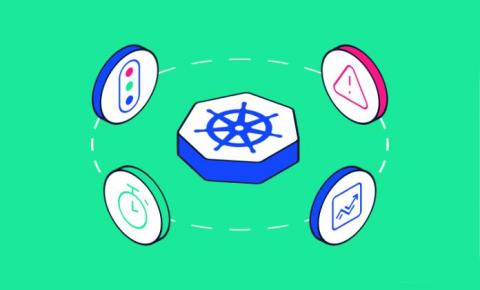
The 4 Golden Signals for Monitoring Kubernetes: Everything You Need to Know

Kubernetes is currently the de-facto container orchestration system on the market. Both small and large companies adopt it, and all major cloud providers offer it as a service. However, Kubernetes is a complex and layered platform, so you can’t just jump into it. There are three essential stages for each application: design, deployment, and operation. This blog post will focus on operation, where you need to monitor and troubleshoot your deployed applications.

Embedded Linux development on Ubuntu - Part III

Welcome to the concluding chapter of this journey on embedded Linux development with Ubuntu. We covered a lot of ground, so let us quickly recap what we learned so far. In Part I we introduced Snaps, software packages designed for the world of IoT. Snap packages isolate and encapsulate an entire application, increasing the security and stability of embedded devices. Snapcraft is the command-line tool to build snaps.

3 Cost Considerations For Your Multi-Cloud Environment

A multi-cloud strategy has become the status quo for many organisations. It provides access to the broadest range of cloud services and best-of-breed technologies, along with a reduced risk of vendor lock-in. As a result, most organisations will use a number of the most popular service options alongside more niche or localised offerings.