Operations | Monitoring | ITSM | DevOps | Cloud

The latest News and Information on DevOps, CI/CD, Automation and related technologies.

The Ubuntu Appliance portfolio

We are delighted to share a new initiative – the Ubuntu Appliance portfolio. Together with NextCloud, Mosquitto, Plex, OpenHAB and AdGuard, we have created a new class of Ubuntu derivatives: specialised appliance images that do one thing beautifully. Ubuntu Appliances transform a Raspberry Pi or PC into a secure, self-updating solution, free of charge. The Ubuntu Appliance mission is to enable secure, self-healing, single-purpose devices.

Is Ubuntu an enterprise Linux distribution?

Is Ubuntu an enterprise Linux distribution? If you are asking, you are probably wondering if you can use Ubuntu anywhere else other than your workstation or development environment. Perhaps you are wondering whether you can implement Ubuntu in your enterprise, including production environments? If that is the case, I have good news for you. Yes. Ubuntu is an enterprise Linux distribution with full commercial support provided by Canonical, the publisher and maintainer of Ubuntu.

OpsRamp Achieves Certification to Monitor and Manage Nutanix HCI

We’re excited to announce that OpsRamp is now officially Nutanix Ready Certified as an AHV Integrated Technology Alliance Partner in the Nutanix Elevate Program. Our certified solution lets customers confidently discover, monitor, and automate not only their Nutanix hyperconverged infrastructure (HCI) but also their broader hybrid IT environment.

Achieving AWS DevOps Competency Status (and What it Means for You)

Chaos Engineering was conceived as a direct response to the complexity and nondeterministic nature of cloud-based applications. Thoughtful fault injection closes the gap between traditional testing methodologies and modern approaches to software engineering like microservices, continuous delivery, and DevOps.

Evaluating Go's Package Management and Module Systems

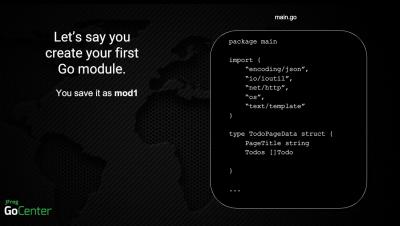
When you're evaluating a language for your next project, few things are more important than available third-party libraries and the package manager that ties them together. While early versions of Go lacked a package manager, they've made up for lost time. In this article, Ayooluwa Isaiah introduces us to go's module ecosystem to help us decide if go is "a go" for our next project.

Fargate vs. Lambda: Serverless in AWS

Serverless computing has taken off in recent years as engineering organizations have shied away from the complexity and cost that comes with managing physical servers and even virtual machines hosted on a cloud like AWS. If you are interested in serverless options on AWS, you should be comparing Lambda and ECS Fargate to figure out what fits your use case best. In this blog post we will compare these two AWS services in the following areas...

Are your cloud costs soaring along with usage? How to cut costs and optimize your cloud performance.

The blessing and curse of cloud computing is flexibility. Now more than ever, companies leveraging the cloud are being revered for their ability to scale up usage of critical applications remotely for employees working from home, while in the same breath lambasted as IT costs sky-rocket. And in the midst of soaring usage, capacity, and cost come budget-cuts to fend off any other necessary evils during this challenging time.

Enabling multicloud K8s communication with Skupper

There are many challenges that engineering teams face when attempting to incorporate a multi-cloud approach into their infrastructure goals. Kubernetes does a good job of addressing some of these issues, but managing the communication of clusters that span multiple cloud providers in multiple regions can become a daunting task for teams. Often this requires complex VPNs and special firewall rules to multi-cloud cluster communication.

Building Machine Learning Pipelines with Kubeflow

In part one of this series, I introduced you to Kubeflow, a machine learning platform for teams that need to build machine learning pipelines. In this section, we will learn how to take an existing machine learning project and turn it into a Kubeflow machine learning pipeline, which in turn can be deployed onto Kubernetes. As you are going through this exercise, think about how you can convert your existing machine learning projects into a Kubeflow one.