Operations | Monitoring | ITSM | DevOps | Cloud

How we made vulnerability fixes review-ready with Agentic Pipelines

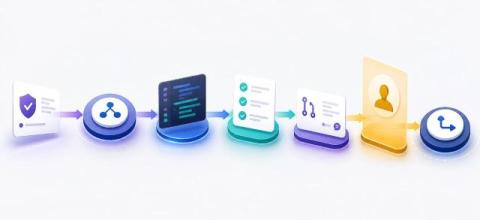
Routine vulnerability fixes are rarely difficult in isolation. The interruption that they cause is the problem: pick up the ticket, trace the dependency, update the package or image, regenerate files, run the checks, open the pull request, then return after deployment to close the loop. That repeated handoff was a good candidate for automation with agentic pipelines. The goal was simple: start the day with a tested pull request instead of another ticket to pick up.

The big question at Black Hat USA 2026: "how do I know?"

Black Hat USA 2026 brought more than 20,000 people to Mandalay Bay in Las Vegas. We were there as a Platinum sponsor at booth 4208, and across two days on the business hall floor we had more than 750 conversations with security engineers and architects. Almost every one of them, whatever it started as, turned into a version of the same question: how do I know? How do I know whether a vendor's AI does what the banner says? How do I know what my agents are doing on the network?

Introducing APEX: Adversarial Pattern Extraction and Correlation

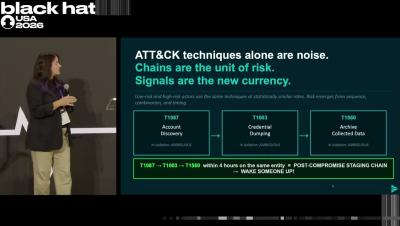
In this Black Hat talk, Nicole Beckwith introduces APEX (Adversarial Pattern Extraction and Correlation), a detection framework—not a Cribl product—that clusters TTP-based signals around entities to support behavioral detection. It is intended for security practitioners, SOC and detection teams, and threat hunters who want to learn how to use raw telemetry or OCSF data, TTP chaining, time windows, criticality, and cross-correlation to detect behavior beyond static indicators and rule-count coverage.

The Strategic Value of Emergency Readiness: Safeguard Operations and Human Capital

Emergency readiness often gets seen as just another compliance task - a checklist of fire extinguishers and evacuation routes to tick off. But that view misses the bigger picture. Real readiness isn't a static obligation; it's a dynamic strategy that protects your entire operation. It safeguards your financial stability, keeps things running smoothly, and, most importantly, shows you care about your people.

Phishing vs. Smishing vs. Vishing vs. Quishing: What's the Difference?

Ask people in the same company to define phishing, and the answers may drift. At least one will use the word as a catch-all for anything suspicious that reaches an inbox, and someone else will apply it to a phone call. That drift can have operational consequences. A ticket labeled phishing that was actually a spoofed call to the help desk may be routed to the wrong queue, trigger an inappropriate playbook, or distort the metrics used to plan future controls.

The Safest Place to Run an AI Agent Is On a Cluster That Doesn't Trust It

Every organization running AI agents has already made a hosting decision. Most made it by accident. The sales team switched on the agent built into their CRM. Engineering is piloting a coding agent in a vendor’s cloud. Someone on the data team deployed a LangGraph service to a VM with a database key in an environment variable, and someone else is running an agent framework on a laptop with production credentials in a dotfile. Each of these is a hosting decision.

The Early Warning Signs of Financial Identity Fraud

Financial identity fraud rarely begins with one dramatic event. More often, it arrives as a handful of details that feel slightly off. A login code appears even though you were not trying to sign in. A lender sends a letter about an application you never submitted. Your bank app asks you to verify information that has not changed. Any one of these could be a mistake. That is why early fraud is easy to miss. The problem often becomes visible only after several small inconsistencies begin to overlap.
The Role of Infrastructure and Mobile Proxies in Modern Operational Reliability

For systems architects, IT operations leaders, and DevOps engineers navigating cloud-native complexity, maintaining robust system visibility requires unhindered data collection pipelines. Platforms like opsmatters.com offer essential insights into cloud computing, operational tools, and IT service management, highlighting how modern infrastructure relies on seamless data integration. Operating at scale requires monitoring global endpoints, validating geographically distributed microservices, and parsing public software feeds without running into access limits.

Integrating Virtual Identity Systems into Modern DevOps and CI/CD Workflows

Modern IT service management and cloud operations rely heavily on automated identity validation, multi-factor authentication (MFA) testing, and isolated staging environments. Deploying cloud infrastructure at scale requires continuous verification without linking critical operational workflows to physical mobile hardware. DevOps engineers building automated alert pipelines or synthetic monitoring suites often implement a dedicated virtual number to receive SMS payloads, isolate production keys, and validate two-factor authentication endpoints programmatically.

What is enterprise risk management and how does it work?

Enterprise risk management (ERM) is the practice of managing risk across an entire organization as one connected picture rather than as a set of separate departmental concerns. What changes when you adopt it is the purpose of the risk data itself. In most compliance programs, risk information exists to satisfy an auditor or fill a quarterly report. Under ERM, that same data has to be good enough to shape strategy, which raises the bar on how it gets scored, owned, and refreshed.

The End Of Cloud-First: What's Driving The Shift To Hybrid Infrastructure

For more than a decade, the prevailing wisdom in enterprise IT was simple: move everything to the public cloud. Hyperscale platforms promised unlimited scalability, lower costs, agility and freedom from the burdens of managing infrastructure. Cloud-first has been rapidly gaining momentum as the de facto path to a modern digital footprint. Until now.

Essential Steps to Respond to a Ransomware Attack

Cyber threats can paralyze a business in seconds. Malicious programs lock down files and demand payment for access. Fast decisions lower risks and protect company records. Teams must act with speed to stop malware from spreading. Clear actions protect critical business information during security crises. Emergency plans guide staff through stressful incidents smoothly. Fast response efforts keep organizational operations stable during computer breaches.

AI Red Team Agents Automate Attacks on your AI Agents. Runtime Policies Automate their Defense.

The AI red teaming market grew up fast this year. OpenAI bought Promptfoo, Cisco and Microsoft shipped automated attack suites, and a seed-stage startup publicly compromised 50 of 55 live customer service bots. These platforms find real problems at a scale no human team can match. But when you read the findings closely, a pattern emerges: agents talked into refunds, transfers, and data leaks they had standing authority to perform. Patching the prompt fixes one phrasing until the next model update.

Cloud Migration for Financial Services Operations

The financial services industry, traditionally cautious and reliant on legacy on-premise infrastructure, is now decisively shifting its operations to the cloud. This migration is driven by the urgent need for greater agility, improved operational efficiency, and the capacity to innovate at the speed of a rapidly changing market. Moving beyond simple data storage, financial institutions are re-architecting their core functions to harness the full potential of cloud computing, transforming everything from customer-facing applications to back-office transaction processing.

Does Your Membership Data End Up in Three Places at Once?

Ask an association administrator where the member list lives and the answer is rarely a single system. It is usually a database of some kind, plus a spreadsheet that somebody maintains for the board, plus whatever the email tool has stored, plus a payment processor holding its own version of everyone's contact details.

What Makes A Business Cybersecurity Response More Effective

Modern network defense requires more than basic firewalls or passive monitoring software. Security incidents strike fast, leaving corporate infrastructure vulnerable without proper operational preparation. Building swift recovery capabilities keeps operational downtime minimal and protects key assets across digital enterprise operations.

Solusec Review: Penetration Testing

Cyber insurers now routinely ask smaller organisations for evidence of penetration testing before they'll even quote a premium. That single requirement has pushed a lot of businesses, charities and schools into a market they don't understand, full of firms whose "testing" amounts to running a vulnerability scanner and printing the results. Knowing who's actually doing manual, accredited work versus who's reselling automated output matters more than most buyers realise until they're staring at a report full of generic findings.

NIS2 is here, and it applies to more companies than owners think

If your company has 50 or more staff, or turns over more than €10 million, and it works in one of the 18 sectors listed in the EU's NIS2 directive, you are almost certainly in scope. National transposition deadlines passed in October 2024, and enforcement has been building since. Checking where you stand takes under an hour. Here is that hour, and a first week that does not begin with a purchase order.

AI finds vulnerabilities faster than you can fix them

If an AI model can find a vulnerability for an attacker, the same model should help a defender fix it. In practice, the math doesn't favor the defender. This quick video digs into the real asymmetry AI-powered vulnerability discovery creates: The goal is models acting as tools for defenders, not weapons for attackers. Getting there means rethinking how much ground your team can realistically cover on its own.

ZTNA Security for Cloud Application Access: A Practical Overview

Nowadays, the average enterprise runs hundreds of cloud applications spanning from software-as-a-service platforms, infrastructure hosted in public cloud accounts, to internally built applications deployed on cloud infrastructure. So each of these has a different login flow, a different permission model, and an often completely independent definition of what a secure session looks like.

Harness Announces Capabilities that Enable Security at Machine Speed | Harness Blog

Vulnerabilities used to move at human speed. A researcher found one, disclosed it, and defenders had days - sometimes weeks - to respond before it was weaponized in the wild. That window is gone. According to the Edgescan 2026 Vulnerability Statistics Report, it still takes an average of 55 days to fix a vulnerability - but the Zero Day Clock shows attackers going from disclosure to first exploit in as little as 6 hours.

Tools and Technologies For Tier 1 Incident Response Automation in 2026

Tier 1 incident response is where an analyst checks whether the alert is real and gathers context on the entities involved. The alert is then closed or escalated with a ticket. The work is repetitive, it never stops, and it grows with alert volume.

How Technology Leadership Is Changing the Future of Cybersecurity

In an increasingly interconnected world, digital security is no longer just a technical issue handled behind closed doors. Threat actors are increasingly sophisticated and attack organizations in complex networks, software supply chains, and by targeting human behavior. Consequently, the way the corporate world approaches risk is quickly moving from merely being defensive to risk governance. Modern technology leadership is key to leading this critical organizational change effort.

TLS 1.2 isn't end of life, but it will be soon

You’re probably running a TLS configuration that the IETF says is “non-conformant”. But you didn’t do anything wrong. In July, the IETF published a pair of RFCs that took away three of TLS 1.2’s key exchange methods and froze the rest of it. The phrase they used is MUST NOT, the strongest thing a specification is allowed to say. Nginx, Apache, and Windows Server all ship with those key exchanges turned on by default. Nothing breaks tomorrow.

The Future of Third-Party Risk Management and Vendor Security

Your supply chain is only as secure as its weakest vendor. You may have world-class security inside your own walls, but the moment an attacker compromises one of your third-party suppliers, they can walk straight into your systems through a trusted connection. That's the reality businesses face today, and that's why choosing the right platform is essential. Black Kite for cyber supply chain risk has emerged as one of the most comprehensive solutions available for organizations that need real, continuous visibility into their vendor ecosystems, not just a one-time compliance checkbox.

12 Top SD-WAN Solutions for Growing Enterprises (2026)

Adding branches, cloud applications, contractors, and connected equipment changes the WAN problem. The network must steer traffic intelligently, preserve application quality during poor link conditions, and apply consistent controls without creating a separate operational stack at every location.

Mapping the NCSC cloud security principles to a sovereign deployment

The 14 Cloud Security Principles from the UK's National Cyber Security Centre form the primary framework for UK public sector cloud procurement and, increasingly, for private sector regulated workloads. Any credible cloud security case in the UK context has to address these principles explicitly. For organizations placing workloads on sovereign cloud specifically, the mapping matters more than for general cloud procurement.

Do Growing Tech Teams Need a Virtual CISO?

Scaling a modern software startup often demands massive focus on feature delivery and market expansion. Technical teams push updates fast, so internal defense often drops down the priority list. Founders handle operational risk on their own until compliance demands appear during client negotiations. Bringing in experienced guidance helps prevent operational downtime before major security issues surface.

Change in behavior: Storage promise

CFEngine 3.29.0 changes how storage promises treat a filesystem that is already mounted. A promise for an unmounted filesystem now mounts only that filesystem instead of all unmounted filesystems, edit_fstab actively maintains the file system table entry to keep it aligned with the promise even when the filesystem is already mounted, and an unmount promise acts only on the explicitly promised filesystem.

Redirection Fraud

You may be familiar with web card skimming, where a fraudster replaces the payment iframe on an ecommerce site with a fake version designed to intercept payment details or divert a transaction. However, there’s another variation that, while not new, is something we encounter far less often. It was highlighted this week during a call from an ecommerce vendor: redirection fraud. In this scenario, the attack starts much earlier in the customer journey.

Building an End-to-End Drone Ecosystem: The Technologies That Need to Work Together

Commercial drone technology is rarely a single application running alongside an aircraft. A complete solution may include flight software, onboard sensors, telemetry, cloud infrastructure, web and mobile interfaces, data processing pipelines, analytics tools, and integrations with existing business systems.

Why a Thermal Camera Rated for Hundreds of Meters Might Alert You at Twenty

Most teams buy thermal on two numbers. Resolution and NETD go into the comparison spreadsheet, the lowest NETD wins, and the purchase order goes out. Then the camera gets installed and the alerts do not arrive when anyone expected. Nothing is faulty. The spec sheet was accurate and the deployment still disappointed, because the numbers on it were answering a different question from the one you were asking.

A Guide to DDoS Protection in Your Network

Learn how DDoS attacks work, how threats are evolving, and how modern network-integrated protection can help defend your infrastructure. Network connectivity is the frontline of revenue generation and customer trust for almost every modern enterprise. But as digital footprints expand across hybrid and multicloud environments, Distributed Denial of Service (DDoS) attacks continue to grow in volume, frequency, and sophistication.

What Is GDPR Compliance? Requirements and How to Meet Them

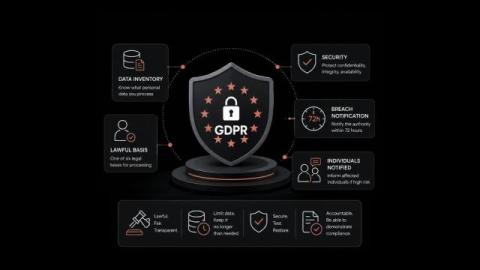
Most teams can describe their GDPR obligations. Far fewer can produce the records that prove they met them. That gap is where GDPR compliance gets hard. The regulation reads as legal text, so it usually gets treated as legal work. About a third of it lands on the IT team instead: records of what you process, security controls that have to hold up, and deadlines measured in hours. Nobody asks for that evidence on a quiet week.

Best SSL Certificate Monitoring Tools in 2026 [26 Analyzed]

The best SSL certificate monitoring tools are Hyperping (certificate checks inside a full uptime, on-call and status page workflow), TrackSSL (dedicated certificate inventory and change alerts), Xitoring (deepest published TLS analysis at the lowest price), UptimeRobot (largest free tier), Better Stack (certificate checks alongside logs, traces and incident response) and Oh Dear (whole-site health for agencies). I analyzed 26 tools and narrowed the list to these six.

DevOps Cost of Ignoring Bad Bots on Your Infrastructure

A traffic spike used to mean good news. Now, it's just as likely to mean a scraper found your pricing page or a credential-stuffing script started hammering your login endpoint at 3 a.m. Most teams treat this as a security problem and hand it off accordingly. That's a mistake, because by the time it reaches security, it has already cost engineering time, compute budget, and a fair amount of sleep.

How Much Should a Business Budget for Cybersecurity?

Picking a cybersecurity budget can feel like guesswork, and for a lot of business owners, it kind of is. There's no single number that works for every company, since so much depends on size, industry, and the level of risk you're willing to take on. That said, there are patterns you can follow. This article breaks down what actually shapes a cybersecurity budget, how much other businesses typically spend, and how to build a plan that grows with your risk rather than lagging behind it.

Google SecOps (Chronicle) Pricing in 2026: Full Cost Breakdown and How to Cut It

Google SecOps, formerly Chronicle, is sold in three packages priced on ingestion volume, and Google publishes no list prices for any of them. Every quote is built around your data volume, retention needs, and package tier, which makes budgeting hard without a sales conversation. This guide breaks down how the pricing model actually works, what ends up on a real bill. It also covers how to reduce that bill before data reaches the platform. Prefer to jump straight to the numbers?

5 NFPA 241 Fire Watch Requirements Every Construction Site Must Know

A failed fire inspection can stop work on a job site for several days. Every day the site does not run, there are costs. The job still has to pay for workers, equipment, and other charges. Many superintendents know that a fire watch is needed at times. Not as many know that NFPA 241 tells exactly when you need it, how long it should be done, and who can be the person in charge.

Kernel-Level Visibility Without Instrumentation: What eBPF Changes for Container Security

Containers have changed how applications are built and deployed, but they have also made security visibility more difficult. Workloads are short-lived, services communicate constantly, and application behavior is distributed across containers, nodes, APIs, processes, and open-source dependencies. This is why many security teams are pairing eBPF with application-level runtime security. eBPF observes activity from the Linux kernel without requiring teams to modify every application, while runtime application security explains which code caused that activity.

The New MCP Headers Are a Gift to Gateways

In short, buried in the transport section of the MCP 2026-07-28 release candidate are three changes that matter more to infrastructure teams than to anyone else: mandatory Mcp-Method and Mcp-Name headers, cache-control-style ttlMs and cacheScope fields, and standardized W3C Trace Context propagation. Together with the stateless core, they turn MCP from a protocol that gateways had to fight into one that meets them halfway.

Zero Day to Fix: Why Security Response Speed-Not Discovery-Is Your Real Bottleneck | Harness Blog

Here's the uncomfortable truth about the Mythos era: knowing about a vulnerability and being able to neutralize it are two entirely different problems. AI models like Mythos are finding vulnerabilities 10x faster than humans ever could. Project Glasswing participants discovered over 10,000 high and critical vulnerabilities in their applications. Firefox alone had 271 previously unknown zero-days exposed by Mythos. That's the good news.

How the Vulnerability Management Lifecycle Runs from Discovery to Verified Fix

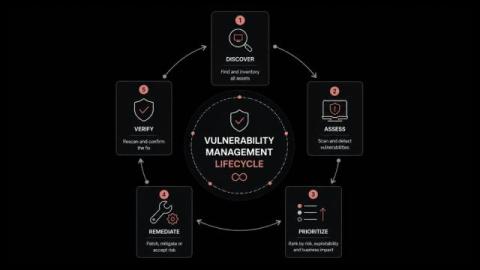
Who in your organization can say, without opening three separate systems, whether last month's critical findings are actually closed? A deployment record answers half of that. The other half needs a rescan, and the rescan often never happens. The vulnerability management lifecycle is that question written down as a repeatable process. It runs from knowing what you own through to proving a fix landed, and it restarts the moment it closes.

Optimising IT Operations for Property Management Platforms

The property management industry has undergone a significant transformation, moving from paper-based ledgers and phone calls to sophisticated digital platforms. This shift places immense pressure on IT operations teams to ensure these platforms are reliable, secure and efficient. For modern property management to function effectively, the underlying technology must be reliable and consistently perform well.

What to Save Before Workplace Retaliation Erases Your Access

Picture a worker who reports unpaid wages or a safety concern to human resources. A few days pass, and suddenly the schedule shifts, the manager's tone turns cold, or the HR portal login mysteriously fails. As awareness around workplace retaliation rises in Los Angeles, employees are learning a hard truth about their digital evidence trail. Access to company platforms is only a temporary privilege, and employers control the master switch. Wait until a dispute escalates to save your records, and you may find the proof is already gone.
Sponsored Post

The key to secure transmission: TLS in the Raygun ecosystem

As our lives increasingly move online and data becomes the lifeblood of business, secure data transmission is imperative. From personal conversations to financial transactions, from healthcare records to sensitive business data, nearly everything we do online requires trust that our data is protected. And if you've ever made an HTTPS request, TLS is behind it, providing that trust.

Getting started with Ansible playbooks in CFEngine

Recently, I’ve been playing around with the ansible promise type by Fabio Tranchitella. It’s amazing how easy it is to leverage the benefits of agents with all the existing automation from the ansible community. Hence, I wanted to share it in a blog post, with an emphasis on easy. Let’s start off by creating a new cfbs project in a cfengine-ansible directory. Make sure to answer yes on the prompt to build on top of the default policy set.

VM Migration - What Happens to Your NSX Segments in Kubernetes?

Planning a migration off NSX usually starts with a networking conversation. Segments, VLANs, routing topology and BGP peering are not things that map cleanly to Kubernetes-native constructs the way the NSX distributed firewall maps to Calico’s tiered microsegmentation. NSX virtualizes the network layer in ways that Kubernetes doesn’t replicate by default. There is no native concept of a Layer 2 segment or VLAN, for instance.

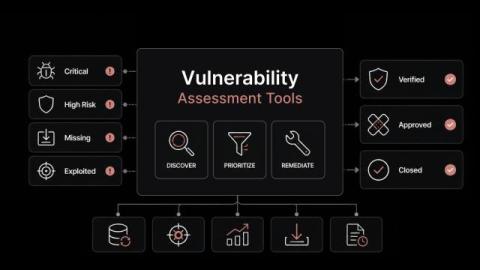
What are the Key Features and Evaluation Criteria for Vulnerability Assessment Tools?

How many findings from your last vulnerability scan have been verified as fixed? For most IT functions, the scan report is easy to produce, and the proof of closure takes far longer to assemble. That difference tends to surface at the worst possible moment, usually an audit or a post-incident review. Vulnerability assessment tools are meant to end that uncertainty. They inspect systems, match what they find against public vulnerability databases, and rank each weakness by how dangerous it is.

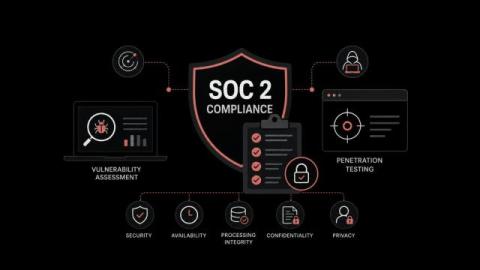
What Is SOC 2 Compliance? Requirements, Controls, and Evidence

Your largest prospect has asked for your SOC 2 report. The deal sits still until you produce one. Most teams handle the first half of SOC 2 compliance fine. They control access. They run backups. They put changes through approval before anything ships. The second half is what stops them, and that half is proof. Your policy says access gets reviewed every quarter. The auditor wants the dated review, the signature on it, and the same record from eight months ago.

How to Secure Cisco AnyConnect, Fortinet, and Palo Alto VPNs with RADIUS MFA

VPN is the first thing attackers test when they're trying to get inside a network. Not because VPN is technically weak - it's not - but because it's the front door, it's usually internet-facing, and in most organizations it asks for exactly one thing: a username and a password.

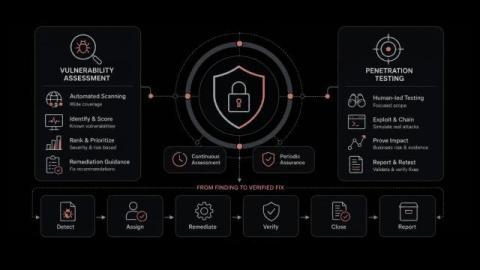
Vulnerability Assessment and Penetration Testing: Differences, Cadence, and Cost

What do you say when an auditor asks for evidence that your security controls hold, and all you can produce is a scan report from last month? A scan lists weaknesses. It says nothing about whether an attacker could chain three of them together and reach the customer database. Vulnerability assessment and penetration testing answer two different questions about the same environment. The first asks what is exposed right now. The second asks what someone with intent and skill could do with that exposure.

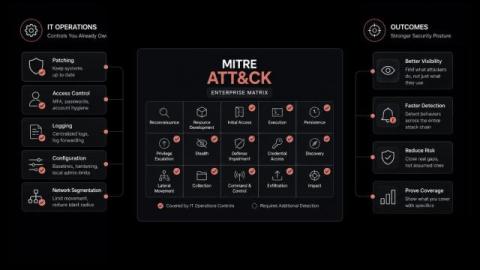
What Is the MITRE ATT&CK Framework? A Guide for IT Ops Teams

Most IT operations teams cannot say how much of the MITRE ATT&CK framework they already cover. The framework gets explained in the language of threat hunting and red teams. The parts that belong to infrastructure work are easy to miss. And then, coverage questions get answered with a guess. The mismatch costs time on both sides. Security asks for a coverage answer that ops has no clean way to produce. Yet the controls that stop a large share of those techniques already sit with your team.

Why QKD Is Gaining Attention in Critical Infrastructure Security

A power supply company has planned a renovation. Well, replacing the office furniture and appliances is not a hassle, but then changing the cryptography embedded in substations, control centers, field gateways, and decade-old operational technology requires different planning and execution. In most cases, these systems have been in service long after encryption protecting them has become questionable.

7 Business Messages That Need More Than a Send Confirmation

Some business messages carry legal or financial weight, and knowing that the email left your outbox tells you very little about whether that weight actually landed. Delivery receipts confirm that a server accepted the message, which falls a long way short of confirming that the right person received it, opened it, or got hold of it inside the window a contract or a statute allows. When a disagreement surfaces eighteen months later, nobody asks whether you meant to send something. They ask what you can show about when it went out and who took it in.

Why Responsible Technology Use Matters

Technology plays an integral role in our lives today. Technology is applied in communications, education, business, shopping, and various other tasks we undertake daily. The emergence of new forms of technology such as Artificial Intelligence, Cloud Computing, and IoT has made life more comfortable, but at the same time, they present challenges including privacy concerns, cyberattacks, and the spread of misinformation, among others.

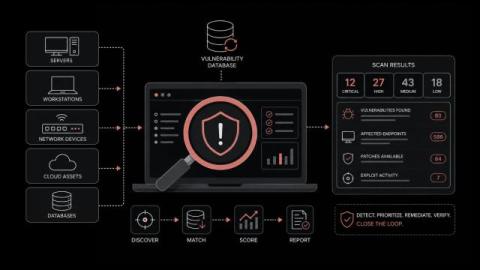
What Is a Vulnerability Scan? How It Works and What the Results Mean

How many machines in your environment are running software with a publicly documented security flaw right now? That figure comes from an asset inventory, and asset records age quickly once they are written. The gap is rarely about tooling budgets. Software inventory across a few hundred endpoints shifts every week, while the published catalogue of flaws in that software grows every single day. Manual inspection loses that race inside the first month.

Ensuring Policies Are Read and Understood: The Power of True Policy Acknowledgment

Simply emailing a PDF or storing a document in a shared folder does not mean your team has actually read or understood it. True policy acknowledgment requires an active, trackable process that proves employees have received, reviewed, and agreed to critical corporate guidelines. Without measurable verification, organizations face significant compliance risks, audit failures, and operational gaps caused by unread policies. By implementing automated policy tracking in Microsoft 365, compliance managers and HR teams can replace manual follow-ups with automated workflows and real-time completion tracking.

Why Managed IT Solutions Are Critical for Protecting Sensitive Business Data

Every business, big or small, stores lots of sensitive information about their customers, finances, and day-to-day operations. Because businesses use an increasing number of digital tools to handle everything they do, there's a much higher chance that all this private info could be exposed, lost, or stolen.

How Entry Level Technology Skills Can Help You Build A Stronger Cybersecurity Career

Starting your cybersecurity career with some technology experience is a good move. The technology field is broad, but, overall, it refers to general technological concepts. Cybersecurity is about securing systems or networks, but, to a large extent, it is necessary to have some background information regarding technology in general. Entry level technology skills will provide the background needed to understand potential problems and the confidence needed to move forward in your career.

Top 8 Red Teaming Companies for 2026

Red teaming has become one of the most important ways for security leaders to validate whether their defenses can withstand realistic adversary behavior. Traditional vulnerability scans and annual penetr ation tests still matter, but they do not always show how attackers move across identity systems, cloud environments, endpoints, applications, networks, and people-driven processes. A strong red teaming company helps an organization answer a harder question: can our security program detect, contain, and respond to a realistic attack before real damage occurs?