The latest News and Information on DevOps, CI/CD, Automation and related technologies.
The software engineering world has become a place where compute, storage, and availability have become the cornerstones of scale. As an industry and as individuals, we should stop to take a closer look at scaling the most important of all resources… our people. In this post I’ve modeled a team with 6 engineers, 2 Sr, 3 Mid, and 1 Jr. This team is getting 450 “units” of work done ( where a unit is just some measure of throughput ) per interval (2 months).
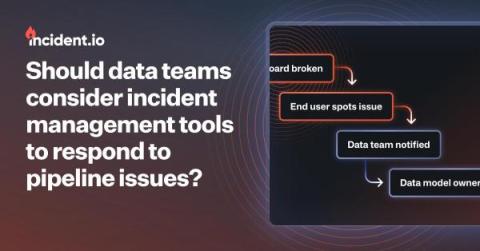
Data teams are adopting more processes and tools that align with software engineering, and from talks at the dbt Coalesce conference in 2023, there’s clearly a big push towards adopting software engineering practices at enterprise scale companies. At the moment, there are a lot of tools in the data space for identifying errors in data pipelines, but no tools for responding to these errors, such as coordinating fixes. This is exactly where an incident management platform makes sense to implement.
Let’s talk about what ISO 27001 compliance means for the tech team. If you’re a CTO, DevOps team lead, or cyber security specialist, you’ll have a lot of plates spinning at any given point in time. You need to ensure and maintain security protocols and compliance without hindering the development team’s ability to test and deploy new code (often at scale). It’s a constant battle to align development speed with governance tasks like audit, compliance, and security.
Microsoft Azure provides an all-encompassing service that allows you to host Docker containers on the Azure Container Registry (ACR), deploy to a production-ready Kubernetes cluster via the Azure Kubernetes Service (AKS), and more. Using CircleCI, you can automatically deploy updates to your application, providing a safer and more efficient CI/CD process for managing your software. This article shows you how to automate deployments for a.Net application to Azure Kubernetes.