Operations | Monitoring | ITSM | DevOps | Cloud

The latest News and Information on DevOps, CI/CD, Automation and related technologies.

Using The Artifactory Terraform Provider

John Peterson of JFrog presents a step-by-step demo of using the Artifactory Provider for Terraform to automate configuration of Artifactory repositories. Terraform is the infrastructure as code tool from HashiCorp that enables building, changing, and managing infrastructure in a safe, repeatable way. Using a configuration language called HashiCorp Configuration Language (HCL), operators and infrastructure teams can manage environments through human-readable, automated deployments.
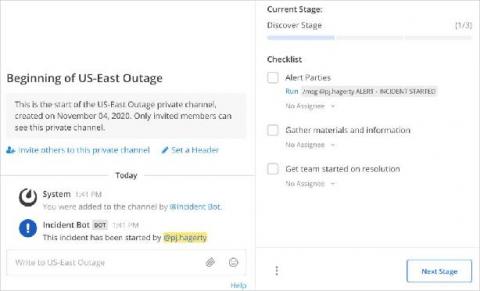
Incident Management in Mattermost: Creating an Incident Playbook

The idea behind Incident Management is to be ready. Not ready for anything, as that can be an unrealistic expectation, but ready to respond when the unexpected inevitably happens. DevOps teams often create incident playbooks in order to ensure they are as ready as possible to handle situations as they arise. Luckily, there is some amazing documentation on how to do just that from our friends at PagerDuty.

New CloudZero CRO Steve Lewis Shares Why Cloud Cost Management Is Ripe for Disruption

This month, I made the decision to join CloudZero as their new chief revenue officer — a choice I’m incredibly excited about. In the past week, a number of colleagues have asked me to share why I joined the company. After answering the question a few times, I decided to take a minute to collect my thoughts and explain why this incredible company is the next step in my career.

Track your Bandwidth & Storage limits with our Quota API

At Cloudsmith, helping fledgeling startups grow from a single person operation to enterprise-level organisations is a constant joy! In those early stages, startups need all the help they can get to survive, and even veteran organisations experience similar challenges when scaling up rapidly. Cloudsmith can help with our self-service approach to managing and defining storage and bandwidth limits to keep costs under control while allowing you to scale when needed.

Deploying Kubeflow everywhere: desktop, edge, and IoT devices

Kubeflow, the ML toolkit on K8s, now fits on your desktop and edge devices! 🚀 Kubeflow provides the cloud-native interface between Kubernetes and data science tools: libraries, frameworks, pipelines, and notebooks. > Read more about what is Kubeflow To make Kubeflow the standard cloud-native tool for MLOps within the AI landscape, the open-source community has accomplished the aggregation and integration of many projects on top of Kubernetes.

Tech Leaders' Panel - Prioritizing Customer Experience in Today's Digital World (Livestream)

In today’s digital world, leading companies are having to redefine what it means to deliver a flawless experience for their customers. In this exclusive panel discussion, learn how software teams at Vend, Xero, Tend Health and Lancom put the customer experience at the centre of their development workflow, closing the feedback loop between code and customer.

Best Practices and Considerations for Multi-Tenant SaaS Application Using AWS EKS

Today, most organizations, large or small, are hosting their SaaS application on the cloud using multi-tenant architecture. There are multiple reasons for this, but the most simple and straightforward reasons are cost and scalability. In a multi-tenant architecture, one instance of a software application is shared by multiple tenants (clients).

Grafana vs Chronograf: Pricing

Grafana vs InfluxDB – Both offer their cloud services for storing, visualizing and alerting on any kind of time-series data. Both cloud offerings differ from each other in various ways and follow distinct pricing strategies. In this article, we cover the details of Grafana as a service and InfluxDB Cloud, their features and benefits along with their pricing models. MetricFire is a Hosted Grafana service, where you can use Grafana dashboards directly in the MetricFire platform.

Sending metrics to MetricFire

Monitoring IT resources is part of the daily activities in large and medium-sized companies, but smaller companies also benefit from the advantages of monitoring systems, memory capacity, availability, and performance. The aim of such proactivity is to ensure smooth processes - for example, IT administrators need to know days in advance that disk space is becoming too low, so they can do something about it.